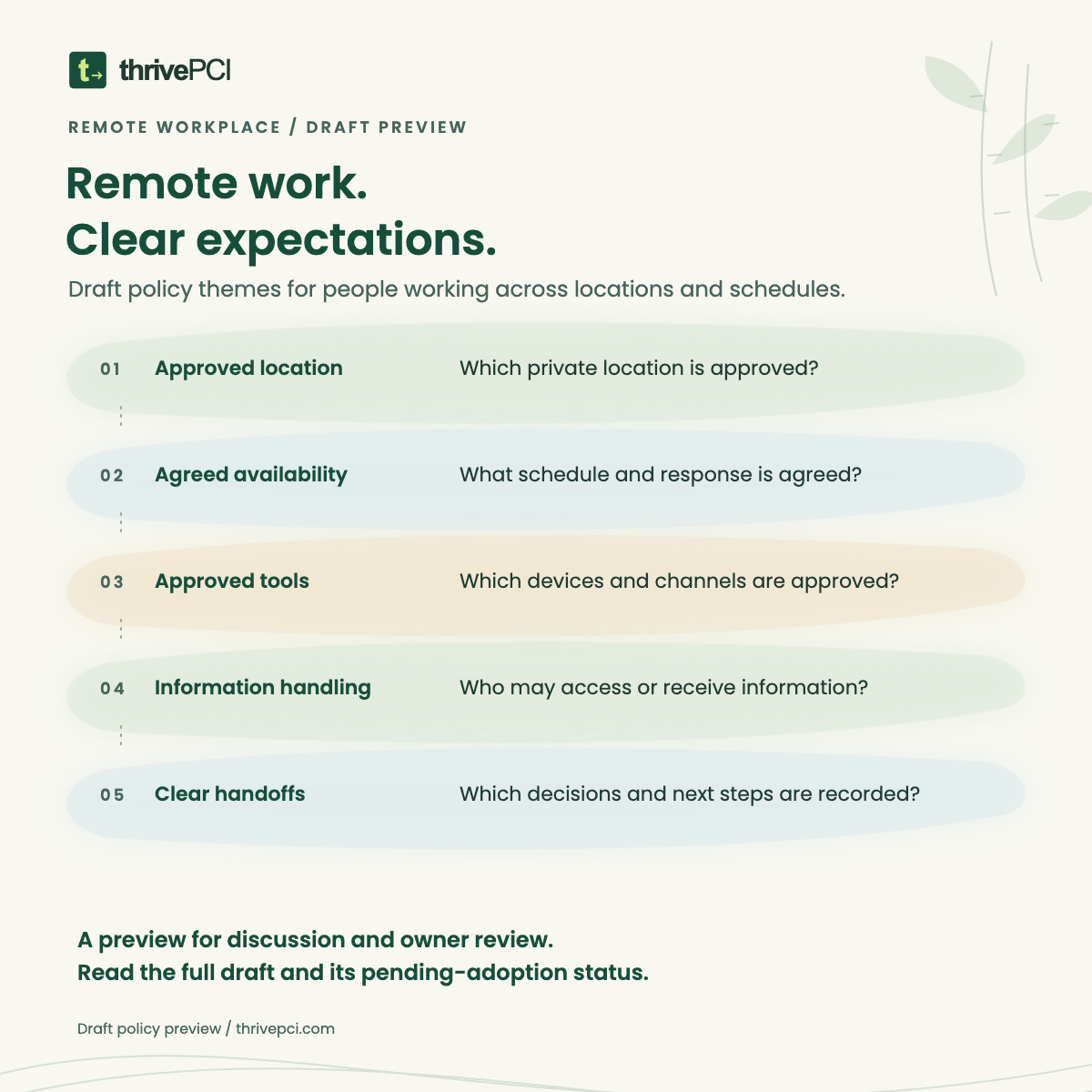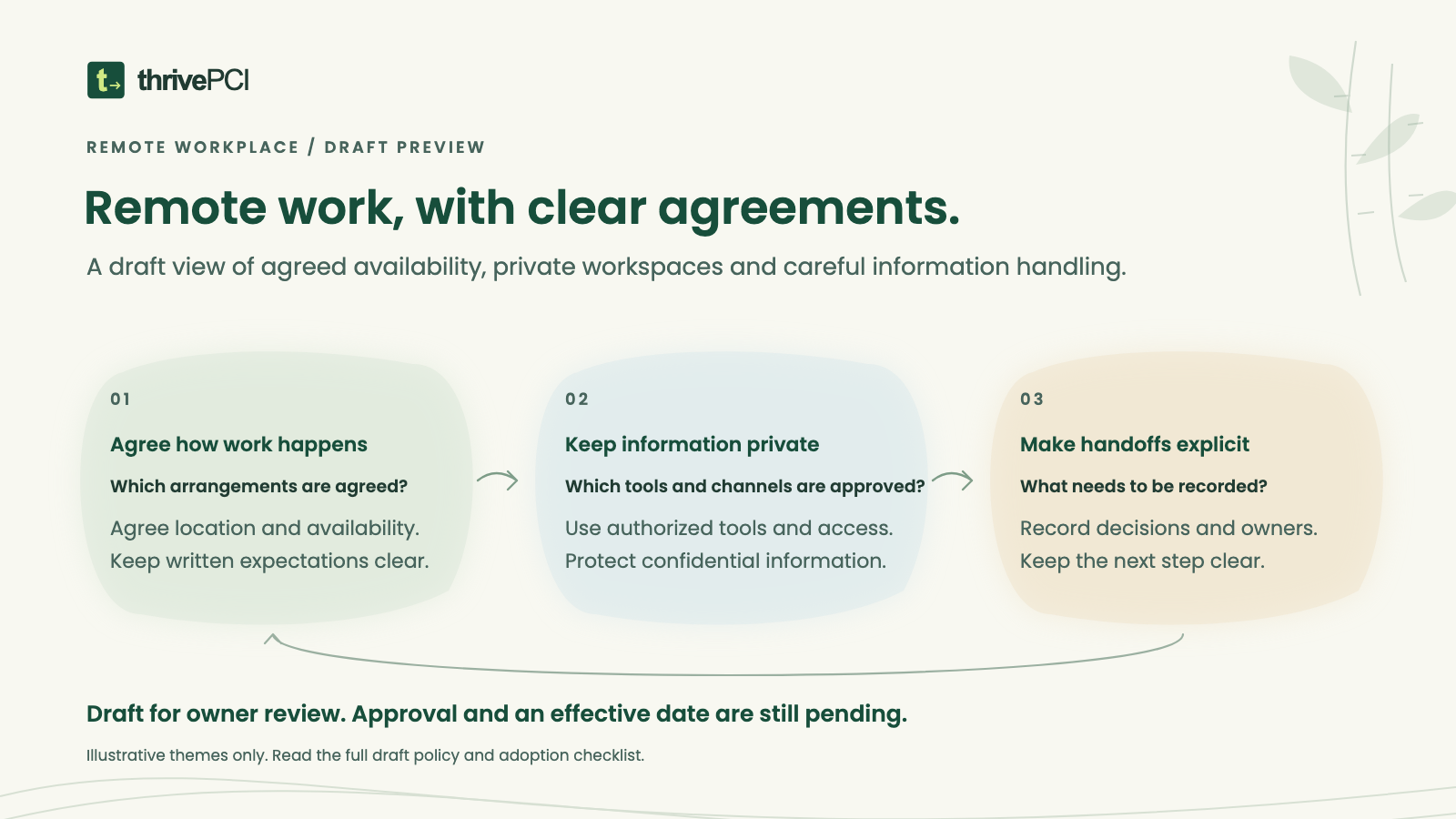
thrivePCI Remote Workplace Policy
Version 0.1.1 | Draft for owner review
Status: Draft; not effective until approved and dated by company leadership
Applies to: thrivePCI employees and contractors, subject to their agreements and applicable requirements
Policy owner: Company leadership
Effective date: Pending approval
1. Purpose and remote-work model
thrivePCI is a fully remote organization. Work is performed remotely; no routine office attendance is required. The company may hold occasional in-person meetings or events with reasonable advance notice and agreed arrangements.
Remote work does not change the responsibilities, service boundaries, confidentiality expectations, or security practices that apply to a person’s role. This policy should be read with each person’s written agreement and any applicable information-handling instructions.
2. Work location
Work from a private, suitable location approved for the engagement. Tell the company before relocating or regularly working from a different state, territory, or country so the company can confirm whether the arrangement is supported.
Do not access or handle company or client information from a public or shared space where another person could see, hear, or capture it. If a coworking space is approved, use a private room for confidential calls, position screens away from others, use headphones, and secure the device whenever unattended.
3. Working hours and availability
Agree working hours, time zone, expected periods of availability, and response expectations with the role owner or manager. Keep shared availability information current and communicate planned absences or schedule changes through the agreed channel.
thrivePCI uses written, asynchronous communication where practical. A person is not expected to monitor messages or respond outside their agreed schedule unless that expectation is separately agreed for their role. Managers should evaluate agreed work and outcomes rather than treating constant online presence as performance.
Follow the working-time, break, and availability terms that apply to the person’s agreement and location.
4. Equipment, accounts, and connectivity
Use company-approved devices, accounts, applications, and storage for thrivePCI work. Use a personally owned device only with prior written approval and any required security configuration. Do not share accounts, passwords, authentication codes, or devices used to access company systems.
Keep devices updated, encrypted where supported, protected by a strong unlock method, and configured to lock automatically when unattended. Use multifactor authentication when available or required. Use a trusted private network; use a company-approved VPN when one is provided or required. Do not install unapproved remote-access or file-sharing tools.
Report a lost device, suspected account compromise, unexpected authentication request, or security warning promptly through the designated company reporting channel.
5. Confidentiality and information handling
Access only information needed for assigned work. Store, discuss, and share company or client information only through approved channels and only with authorized recipients. Verify recipients before sending information and use the least access needed for the task.
Do not place company or client information in personal email, personal cloud storage, unapproved messaging, removable media, or unapproved AI tools. Do not copy or retain information beyond the approved work purpose and retention instructions. Keep printed material to a minimum and dispose of it securely when no longer needed.
Do not submit live payment account data, sensitive authentication data, passwords, API secrets, or one-time codes to thrivePCI learning materials, public channels, or AI tools. Client assessment evidence may be handled only when the engagement, written scope, authorized people, approved channel, and handling instructions permit it. The public education portal is not a client-evidence intake channel.
6. Remote meetings and collaboration
Use approved meeting and communication tools. Protect confidential discussions from being overheard, and avoid displaying sensitive records while screen sharing unless needed and authorized. Camera use is optional unless a specific meeting purpose requires it and the expectation has been communicated in advance.
Record decisions, accepted owners, and next steps in the approved work channel when a written record is needed. Do not record a meeting or distribute its transcript without informing participants and following the applicable approval and retention instructions.
7. Safety, accessibility, and support
Choose a work setup that supports safe and focused work. Raise equipment, accessibility, or workspace concerns with the role owner so a suitable arrangement can be discussed. Any accommodations or equipment arrangements will be handled individually and documented where appropriate.
For urgent technical, security, or work-continuity issues, use the designated company contact or escalation channel. The company must assign and communicate that channel before this policy takes effect.
8. Travel and temporary work arrangements
Obtain written approval before working while traveling, using a new work location for an extended period, or crossing a jurisdiction boundary. Approval may depend on role, information access, customer commitments, security, and administrative requirements. Keep devices and work materials secured during travel; do not leave them unattended in public areas.
9. Expenses and equipment arrangements
Equipment, connectivity support, and approved work expenses will be stated in the relevant written agreement or separately approved in writing. This policy does not establish a particular stipend, reimbursement amount, or equipment entitlement. Apply any requirements that govern the individual’s location and agreement.
10. Vaccination
thrivePCI has no company-wide vaccination requirement. Applicable local legal requirements still apply.
11. Concerns and policy review
Raise a question or concern with the role owner or company leadership. Report suspected information exposure promptly; do not conceal or independently investigate a possible incident. Preserve relevant details and follow the company’s response instructions.
Company leadership may review this policy when work practices or operating needs change. Changes will be communicated to affected people and will not override a written agreement or applicable requirement.
Adoption checklist
Before setting an effective date, company leadership should confirm:
- Approved work locations and the process for relocation or international work.
- Role-specific working hours, time zones, availability, and escalation expectations.
- Approved device, software, storage, meeting, VPN, and AI-tool requirements.
- The designated security and urgent-support reporting channel.
- Equipment, connectivity, and expense arrangements by worker location and agreement.
- Any local review needed for working time, breaks, expenses, safety, accommodations, privacy, or employment terms.
This draft establishes a remote-work baseline. It does not state that thrivePCI currently employs staff in any particular jurisdiction or that a specific device, VPN, reimbursement, or incident-response system is operational.