
NEWSLETTER · ISSUE 11
Prepare for a conversation the evidence can support
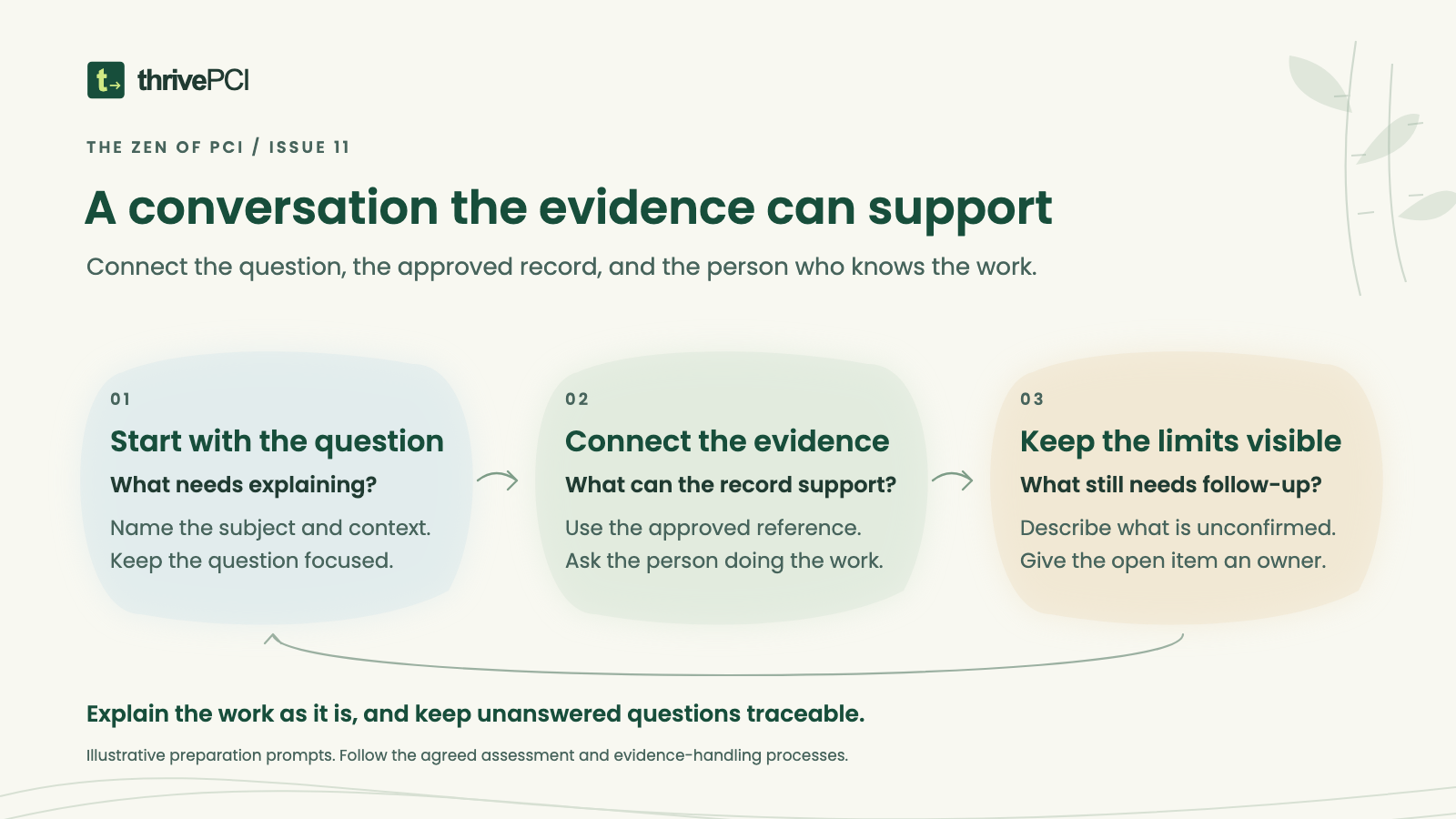
A useful preparation conversation starts with a question that someone can answer from the work they actually know. The supporting record gives that explanation a reference point. Together, they help people understand what happened, what the record represents, and what still needs confirmation.
The aim is a clear account of actual work. A polished answer that stretches beyond the source can leave everyone with a less reliable understanding. A straightforward limitation gives the next question somewhere useful to go.
In our fictional supplier-integration example, the covering colleague has prepared a handoff marked “ready.” The change record still shows a pending decision. Before the conversation, the coordinator clarifies that “ready” describes the prepared handoff. It does not describe authorization to proceed with the integration.
The coordinator locates the approved record through the established access route. The subject matter owner explains the work it represents. Those contributions belong together, even when different people provide them. Finding a record does not give the coordinator firsthand knowledge of every action behind it.
Start with a question people can recognize
“What does ready mean here?” is more useful than asking someone to defend a label. It connects the wording to the preparation task and the decision that remains open. A follow-up can then ask who can confirm the pending decision through the normal route.
Keep the conversation close to the subject. Which integration, environment, activity, or part of the process does this explanation concern? Name the represented time or version where it matters. Explain the coverage the record actually provides. A record about one activity may leave another activity unanswered.
These are practitioner preparation prompts. They do not create a testing procedure or prescribe an interview format. In a formal assessment, use the agreed arrangements and let the authorized assessor direct the relevant assessment conversation. Normal access, handling, approval, and escalation processes still apply.
Leave a conversation note people can use
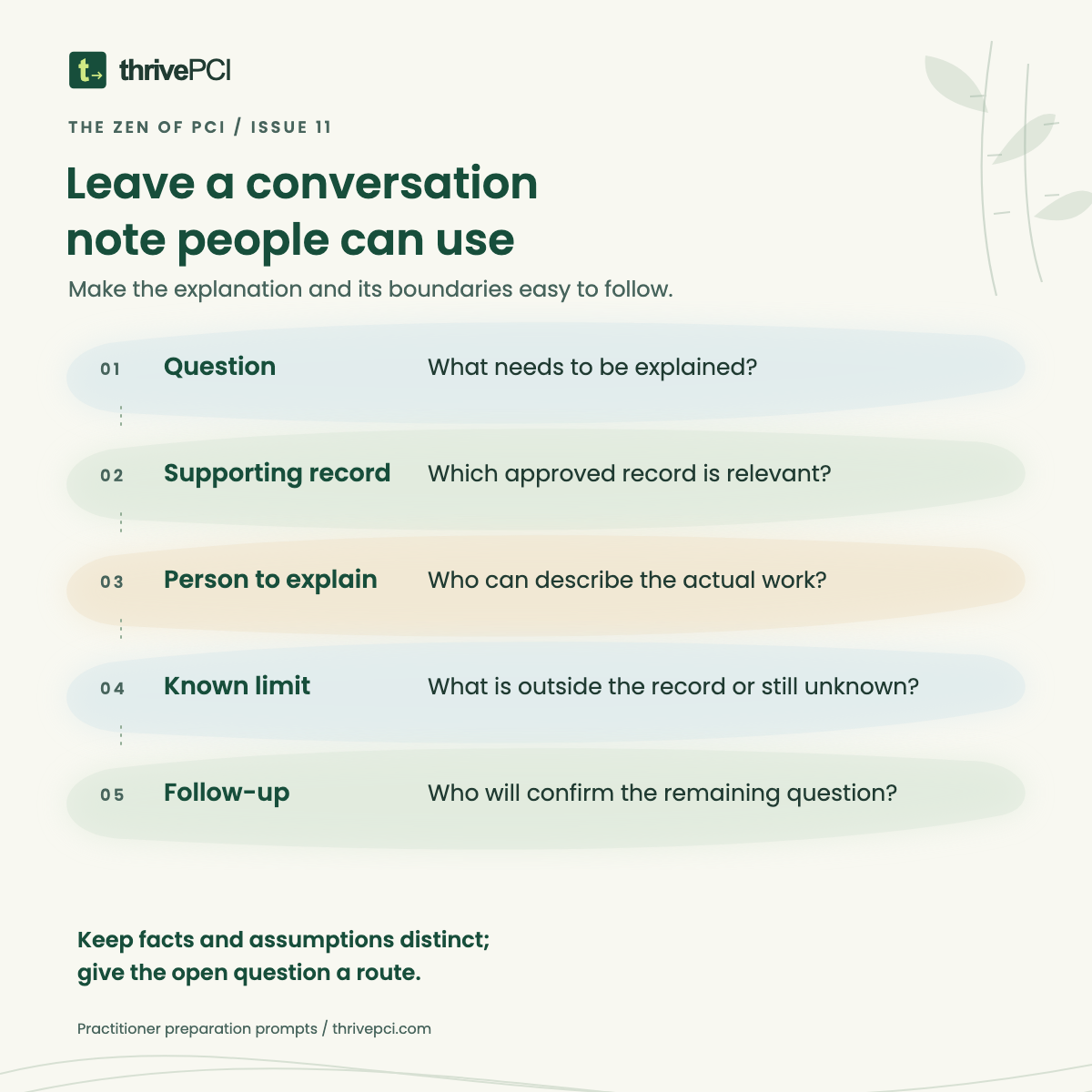
Use five prompts to give the conversation a small, dependable structure:
Question: Write the actual question in language the participants understand. Separate a request for explanation from a request for a decision.
Supporting record: Identify the approved reference and its relevant time, version, and coverage. Share it only through the authorized route with people permitted to receive it.
Person to explain: Identify the person who can describe the actual work. If their availability or responsibility needs confirmation, leave that uncertainty visible.
Known limit: State what the record or participant cannot establish. In the fictional example, a prepared handoff does not settle the pending integration decision.
Follow-up: Record the unanswered question, responsible owner, and next step through the established process. Keep an unconfirmed owner or next step visible until it is agreed.
The note should help the participants continue accurately. Keep unnecessary evidence and sensitive details out of a general coordination summary. A reference can point an authorized person to the record without copying its contents into another channel.
Make room for an honest answer
“I can explain the handoff preparation; I need the decision owner to confirm authorization” is a useful answer when it reflects the facts. So is identifying a missing record or saying that the represented period does not cover the question being asked.
Do not rehearse an answer someone cannot support, invent a memory, or alter a live configuration to make a demonstration appear complete. If the conversation reveals a gap, capture it and use the established route. Preparation should improve understanding of actual work, including its limits.
Try a five-minute conversation
Work in pairs using one fictional question and one placeholder record. Avoid real evidence. One person asks what “ready” means for the supplier integration. The other uses the five prompts to explain the prepared handoff and the decision still pending.
Ask the listener to explain back what the record supports and what it does not support. Compare that explanation with the placeholder record. If a phrase implied authorization or wider coverage, revise the note so its meaning is accurate.
Finish by recording unanswered questions with an owner and a next step through the normal route. If either is unknown, say so. This short exercise is an optional practice, not a PCI activity interval or a substitute for prescribed work.
A calmer conversation leaves people with an explanation they can trace, a limitation they can recognize, and a follow-up they can continue. That is useful preparation. It does not promise an assessment outcome.
Practice with the free Assessment Handover guide (opens in a new tab)