
NEWSLETTER · ISSUE 12
Turn preparation findings into owned improvements
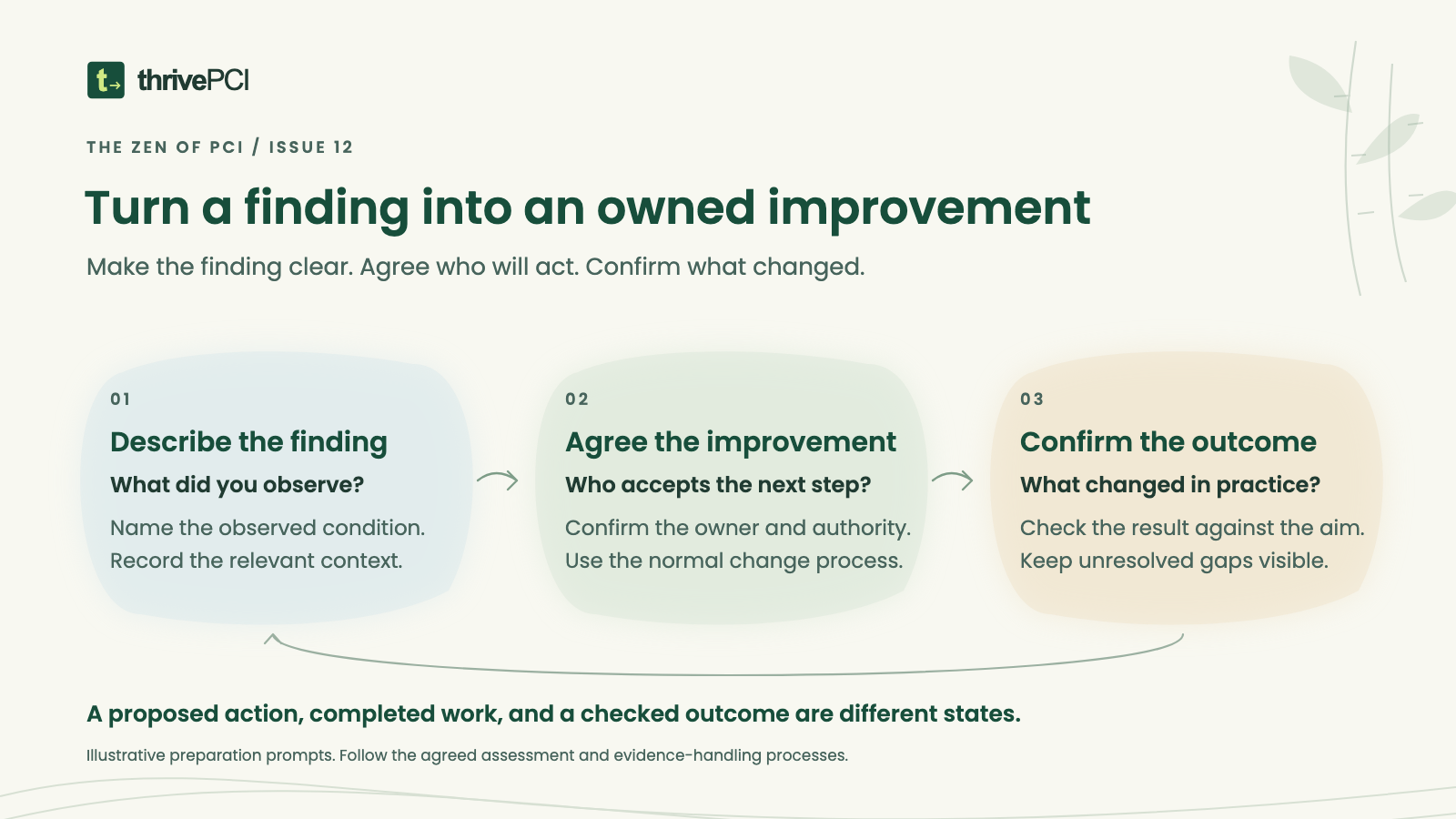
A preparation finding becomes useful when someone can carry it into everyday work. The observation needs enough context to be understood. The improvement needs a clear purpose. A person with the right responsibility needs to accept the next step. Later, someone needs to check whether the intended result actually happened.
That connection takes care. Naming an action can feel like progress before anyone has agreed to do it. Updating a document can feel like closure before anyone has tried the changed approach. A dependable improvement keeps those stages visible.
In our fictional supplier-integration example, the handoff was marked “ready” while the integration decision remained pending. The preparation conversation clarified the distinction. It also revealed a recurring problem: different colleagues used the same status label to mean different things.
The finding concerns that ambiguity. It does not establish that the integration was authorized, that a control failed, or that a formal assessment finding exists. Describe the observed preparation problem at the level the available information supports. If a separate issue requires escalation, use its established route.
Start with the friction people experienced
“Improve communication” leaves too much for the next person to interpret. “Colleagues could not tell whether ready meant handoff prepared or integration authorized” identifies a specific uncertainty. Keep the subject, source reference, represented time, and limits available through approved channels.
The proposed improvement is a clearer status vocabulary and an agreed return point for unresolved decisions. The team would distinguish a prepared handoff from a pending decision and identify where the decision owner will confirm the next position. This proposal still needs the appropriate owner’s acceptance and any required approval.
A coordinator can capture the observation and connect the participants. Assigning a name in a note does not give that person authority, capacity, or agreement. Confirm responsibility with the person and route an unresolved ownership question through the normal process. Leave it visibly unconfirmed until that happens.
Leave an improvement note people can use
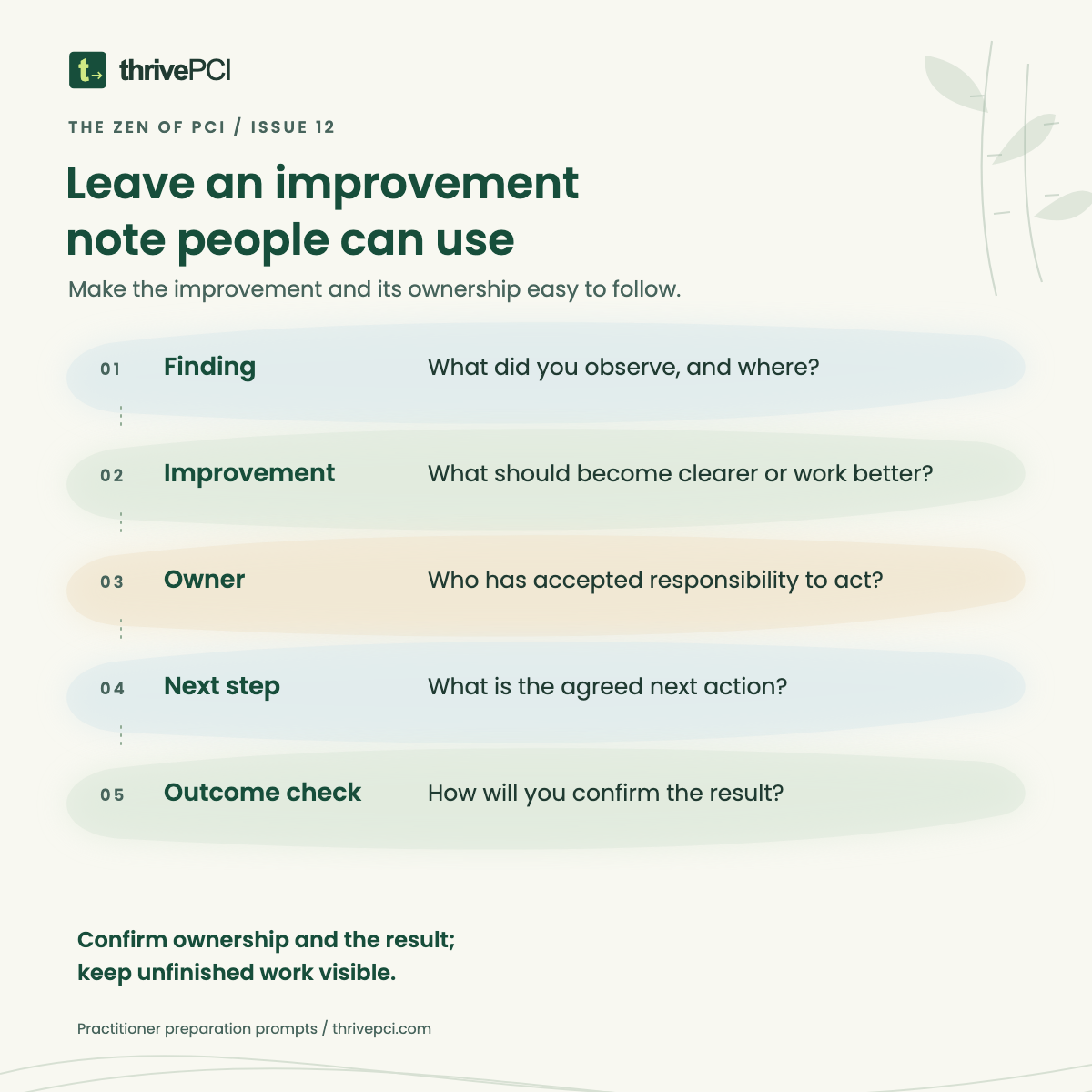
Use five prompts to connect the observation to work that can be continued:
Finding: Describe what was observed and why it matters to the preparation task. Keep interpretation separate from supported facts and identify important limits.
Improvement: State the intended change and the result it should make possible. In the fictional example, a reader should understand the difference between prepared work and an unresolved authorization decision.
Owner: Identify the person who has accepted responsibility for the improvement. Preserve required decision authority and contributions from other roles. Mark proposed ownership as proposed.
Next step: Record the agreed action and return point through the normal work process. Keep approval, scheduling, and dependencies visible. A draft vocabulary is a proposal until the relevant review and change steps are complete.
Outcome check: Describe how the authorized participants will determine whether the improvement helped. Use a relevant example and retain a reference to the check. If the result is mixed or unsupported, keep that visible and continue the work.
The note is a coordination aid. Store evidence in its approved location and share only the context each recipient is authorized to receive. These prompts do not replace a formal finding, corrective-action record, change procedure, or assessment decision where one applies.
Check the changed experience
For the fictional improvement, an owner might arrange an authorized trial using a placeholder handoff. Ask another colleague to identify what is prepared, which decision is pending, and where the next confirmation belongs. Compare their understanding with the intended meaning.
A revised label alone does not demonstrate that readers understand it. A successful example also does not prove wider effectiveness. Record the scope and limitations of the check. The appropriate owner decides what further work is needed through the established process.
Keep proposed, implemented, and checked distinct. If the trial still produces confusion, revise the approach and agree the next step. If it works for the intended use, record the supported outcome and the normal route for maintaining the improvement.
Try a small fictional practice
Take the ambiguous “ready” label and create one improvement note using the five prompts. Use invented names or role placeholders and no real evidence. Ask a partner to point out any owner acceptance, approval, or completed result that the note implies without support.
Revise those phrases. Finish with an honest current position and a useful next step. This optional practice introduces no PCI activity interval and promises no assessment outcome.
Preparation can leave people with more than a list of things to fix. It can leave a small improvement that someone has accepted, a path for carrying it out, and a way to learn whether it helped.
Practice with the free Assessment Handover guide (opens in a new tab)