
NEWSLETTER · ISSUE 20
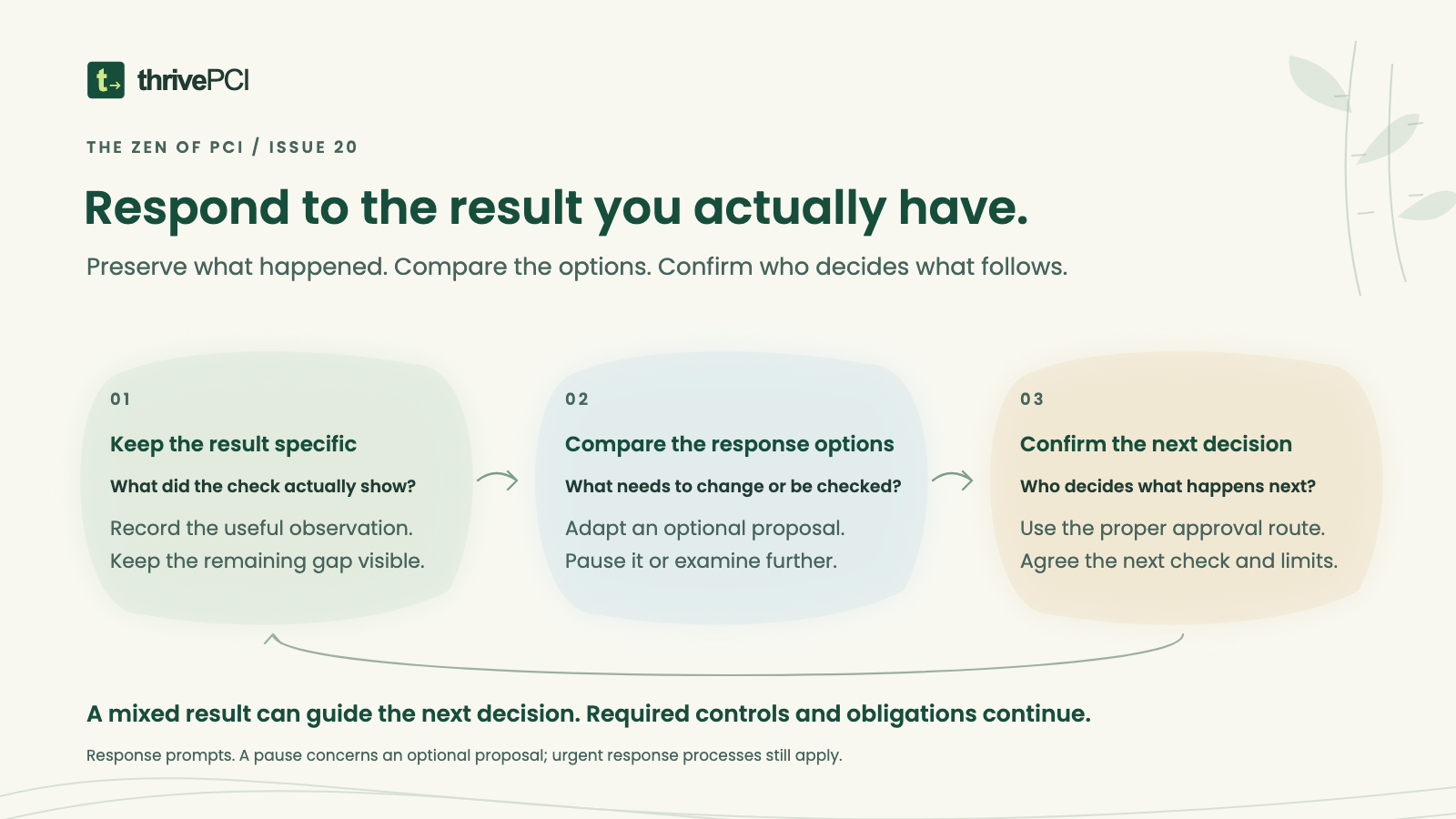
Respond to the result you actually have
A mixed result gives a team something specific to work with. Part of the intended outcome appeared; another part remains unresolved. A useful response preserves both observations, considers the available options, and brings the next decision to the person responsible for it.
This is a moment for careful interpretation. Calling the whole approach successful can hide a gap that still matters. Calling it a failure can discard something worth keeping. Describe what happened clearly enough that another person can understand which response the result might support.
In our fictional supplier-integration exercise, a participant could identify the next question from a placeholder handoff but could not identify the role responsible for answering it. The limited check used invented records in a defined setting. Its mixed result points to a responsibility question while preserving the useful observation about finding the question.
The team now has choices to consider. It could propose a clearer fictional role label through the appropriate process, pause the optional proposed change while seeking context, or ask whether another suitable check would clarify the gap. The separate contributor-capacity question and pending live integration decision remain with their appropriate owners.
Keep the result specific
Begin with the agreed question, the observation, and the conditions under which it arose. In the fictional example, finding the next question and identifying its responsible role were separate parts of the check. Recording both helps the next reader see what was learned and what remains uncertain.
Then distinguish the gap from a proposed explanation. Perhaps the wording needs a role label. Perhaps the responsibility boundary itself needs clarification. The observed result alone may not establish which explanation applies. Keep a useful possibility open long enough for the appropriate owner to consider it.
The aim is a response proportionate to the actual question. More activity is useful when it helps resolve a relevant uncertainty or carry an authorized decision into work.
Leave a response note people can use
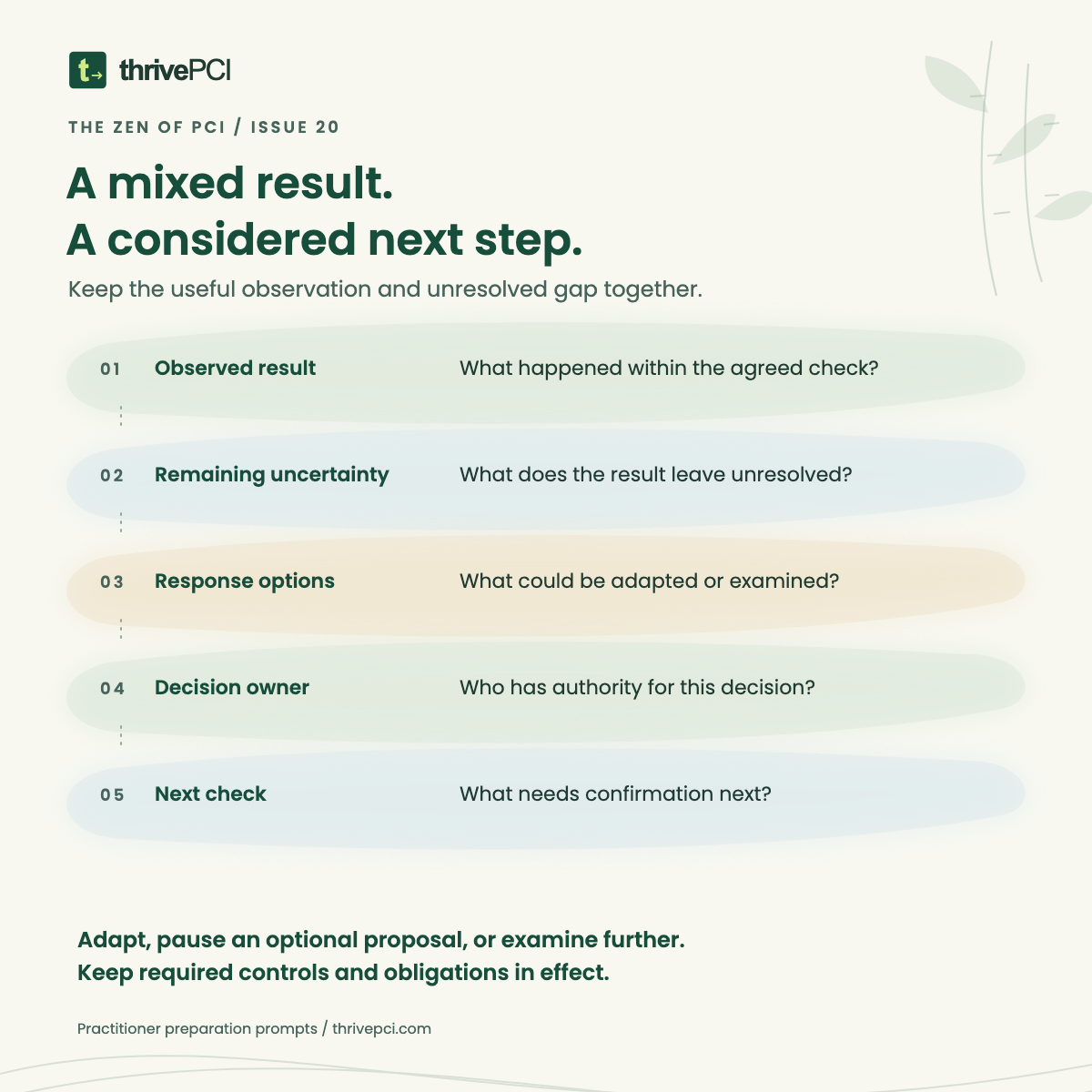
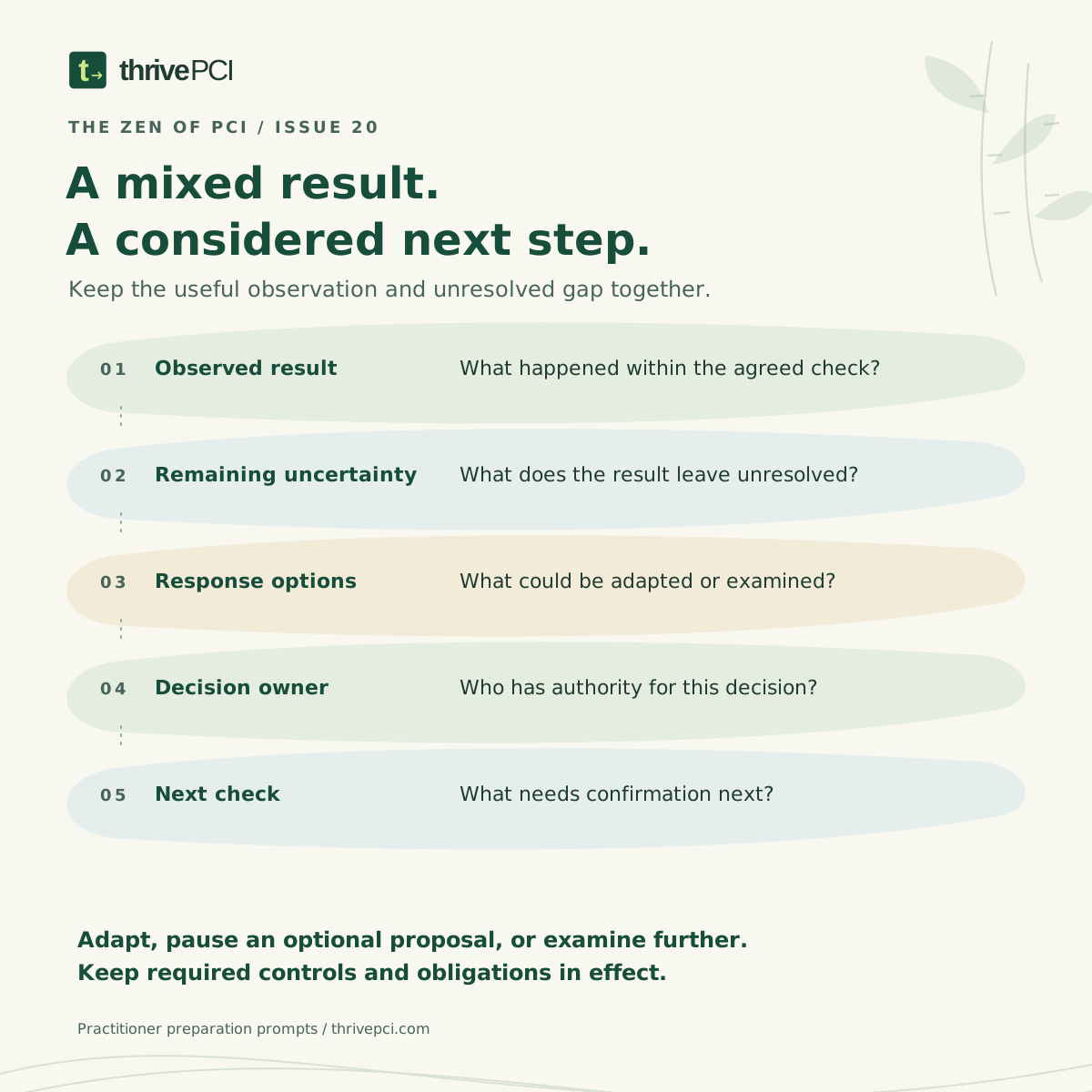
Use five prompts to connect the mixed result with an appropriate next decision:
Observed result: State what happened and identify the supporting reference through its authorized route. Preserve the method, conditions, and scope needed to understand it. Include the useful part and the unresolved part without turning either into a verdict on the whole approach.
Remaining uncertainty: Describe what the result leaves unanswered. Separate an unknown fact, a possible explanation, and a decision that belongs elsewhere. In the fictional exercise, a missing role in the participant's answer does not establish whether wording or responsibility definition caused the difficulty.
Response options: Compare appropriate possibilities, including adapting the proposed example, pausing the optional trial, or examining a more focused question. Describe what each option could clarify and which conditions apply. Pausing an optional proposed change never means suspending required security controls, obligations, deadlines, or urgent action.
Decision owner: Identify the role with authority for the specific response decision and confirm any accepted follow-up ownership. Keep receipt, a proposed action, accepted ownership, approval, and work performed distinct. A coordination note can make the question easier to decide without granting permission or assigning someone an unaccepted task.
Next check: Describe what would help confirm the position after an authorized response, if a check is appropriate. Agree its purpose, accepted owner, prerequisites, and limits through the normal route. A proposed role label or further check remains proposed until the applicable decision and conditions support proceeding.
The note supports existing approval, change, evidence-handling, assessment, and operating processes. It creates no PCI activity interval or changed deadline. Required controls and prescribed urgent response continue through their established processes while the optional idea is considered.
Compare the response options
In the fictional example, the owner might first need context about the responsibility boundary before deciding whether wording should change. That is a useful next question. A small edit can be easy to propose while still requiring the right explanation and approval.
If an appropriate role later authorizes a limited adaptation, preserve that decision's scope and conditions. Record the action and its checked result separately. Neither the earlier mixed observation nor a later improvement would authorize live integration, wider rollout, or a compliance conclusion.
Try one response conversation
Use invented role names and the fictional mixed result. Write the five prompts. Compare an adaptation, a pause of the optional trial, and a focused further question. Ask a partner which decision belongs to which role and what remains proposed.
Use no real evidence or sensitive details. Revise phrases that imply automatic approval, suspended obligations, or a result broader than the check supports. A useful response lets people keep what they learned, face what remains uncertain, and choose the next supported step.
Explore the free Program Maintenance guide (opens in a new tab)