
NEWSLETTER · ISSUE 28
Turning shared responsibilities into an implementation plan
An agreed responsibility is a useful beginning. Implementation asks the next set of questions: what will someone do, what must be ready first, and how will the team know the intended result has been observed?
A small plan can connect those answers without hiding uncertainty beneath a row of green status labels. Give each action enough context for the person doing it, the people it depends on, and the person who will review the result.
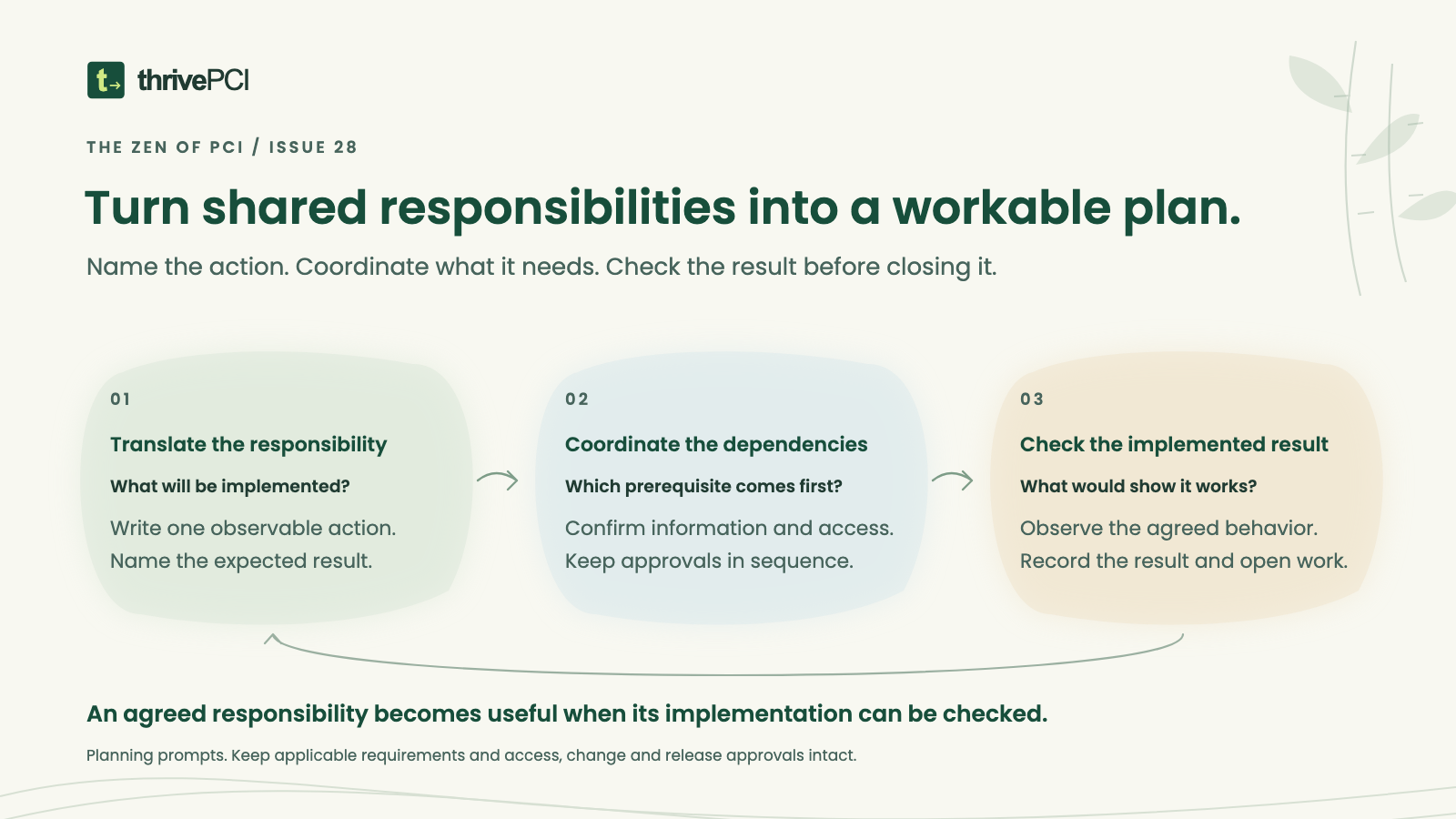
Translate the responsibility
Our fictional subscription startup has clarified a provider and developer configuration handoff. For this exercise, the proposed arrangement includes a notification that should reach a named business role. The team now needs to turn its agreed allocation into a bounded implementation action through the appropriate approval process.
The action is to configure and check that handoff in an authorized test setting using synthetic details. The developer needs the provider's relevant instructions and the business's approved contact choice. The provider and business each retain the duties established for this invented arrangement. A coordinator helps connect the work without taking over every responsibility or approval.
Leave an implementation note people can use
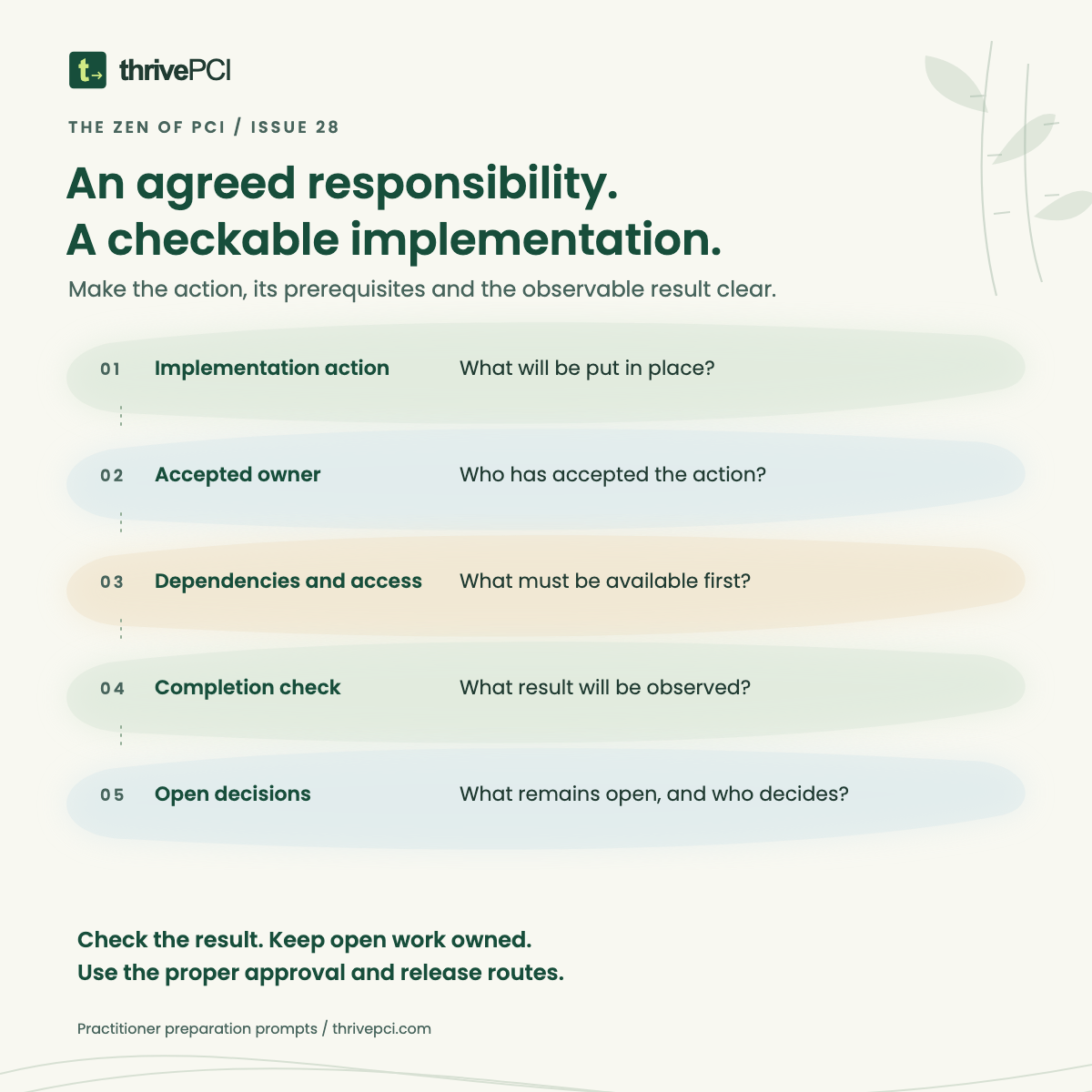
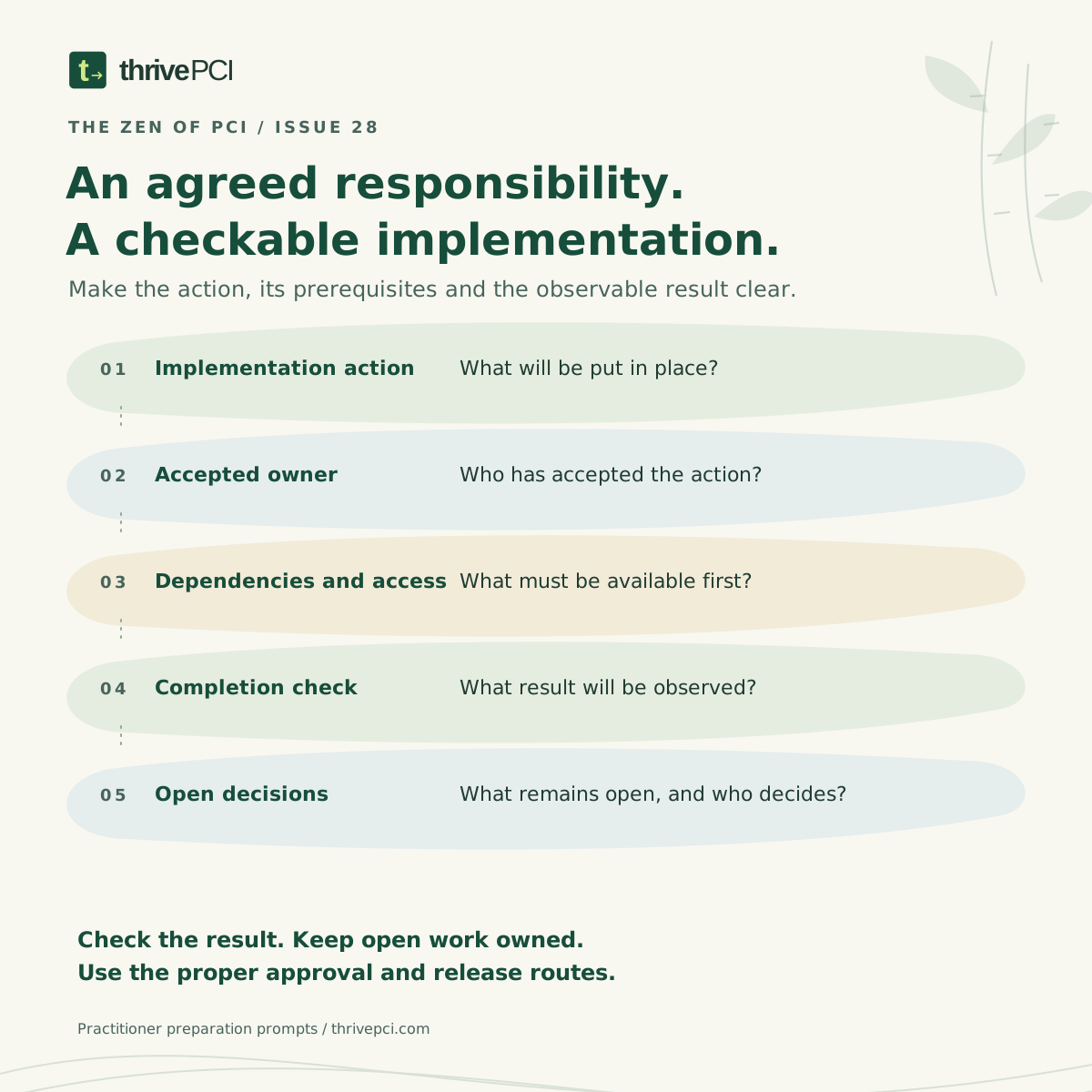
Use five prompts to connect the responsibility record to work someone can carry out:
Implementation action: Describe the change or setup in concrete terms and link it to the agreed responsibility. Name the intended result and its limits. Here, the action concerns one notification route and its handoff, not the whole checkout or every security requirement. Keep proposed work distinct from an authorized change. If the underlying allocation is still disputed, seek clarification before treating it as an instruction.
Accepted owner: Confirm who has accepted delivery or coordination of the action, what they can decide, and where they need help. Identify the provider or business contributor for each part. One named coordinator makes questions easier to route; that name does not transfer another party's accountability, technical authority, or approval responsibility. Confirm acceptance with the person rather than inferring it from a copied message.
Dependencies and access: Record what must be available before work can proceed safely and in the approved order. The fictional developer needs the relevant service instructions, an agreed contact role, and appropriately authorized test access. Identify who will supply each dependency and how unresolved access or configuration questions will be handled. A planning note does not grant access, bypass a change process, or authorize production use.
Completion check: Agree the observable result, the record needed to support it, and the appropriate reviewer. In the invented test, a synthetic notification reaches the intended role, that role can explain the expected next action, and the team records the observed result through its normal process. A task being marked complete says less than a clear description of what was checked and what happened. Keep implementation, observation, and approval distinguishable.
Open decisions: Give remaining questions an accepted owner and explain which action or decision depends on the answer. An unanswered contact escalation question should remain visible even if the initial notification arrives correctly. Record the next authorized route for clarification. Waiting on a dependency does not pause required obligations, deadlines, or prescribed urgent response.
Coordinate the dependencies
Walk the proposed sequence with the people involved. Can the provider identify the information it supplies? Can the developer explain the required access and setup? Can the business describe the contact choice and the review it must provide? A missing prerequisite is useful information for the plan, not a reason to improvise access or treat a proposed workaround as approved.
PCI SSC explains that customers must manage and oversee their third-party service-provider relationships. Its guidance also describes obtaining relevant provider evidence and responsibility information; a responsibility matrix can help document the allocation. Our five prompts are practitioner planning aids that help people use that understanding. They do not replace applicable requirements or evidence.
Check the implemented result
Practice with an invented service, a placeholder contact role, and synthetic messages. Complete the five prompts for one handoff. Leave one dependency unanswered and ask a partner to identify what can proceed, what must wait, and who accepted the next question.
After the authorized check, record the actual position: planned, implemented, observed, or approved as appropriate. A successful exercise does not establish production readiness or PCI DSS compliance. PCI SSC identifies compliance-accepting entities, typically payment brands and acquirers, as determining validation and reporting methods. Confirm the appropriate reporting route separately.
A usable implementation plan leaves the team able to act within its authority, recognize the expected result, and keep unfinished decisions in view.
Explore the free Provider Responsibilities guide (opens in a new tab)