
NEWSLETTER · ISSUE 14
Prioritize competing improvements with the context intact
Several useful improvements can arrive together. One would make a handoff clearer. Another would make the current guidance easier to find. A third would address friction in a different process. Each has a reason to exist. The next task is to understand their relationships and agree what should happen next.
A calm priority conversation makes the reasoning visible. It connects consequences, applicable constraints, dependencies, available capacity, and the person authorized to decide. The aim is an order people can explain and continue, with unresolved questions and work awaiting attention still visible.
In our fictional supplier-integration example, the team has checked clearer status vocabulary on one placeholder handoff. The live integration decision remains pending. The proposed vocabulary update, a better route to current guidance, and an unrelated process improvement now compete for the same contributors.
The placeholder check supports its specific scope. It does not approve wider rollout, settle the integration decision, or decide which other work may wait. Those questions still belong to the appropriate owners and established processes.
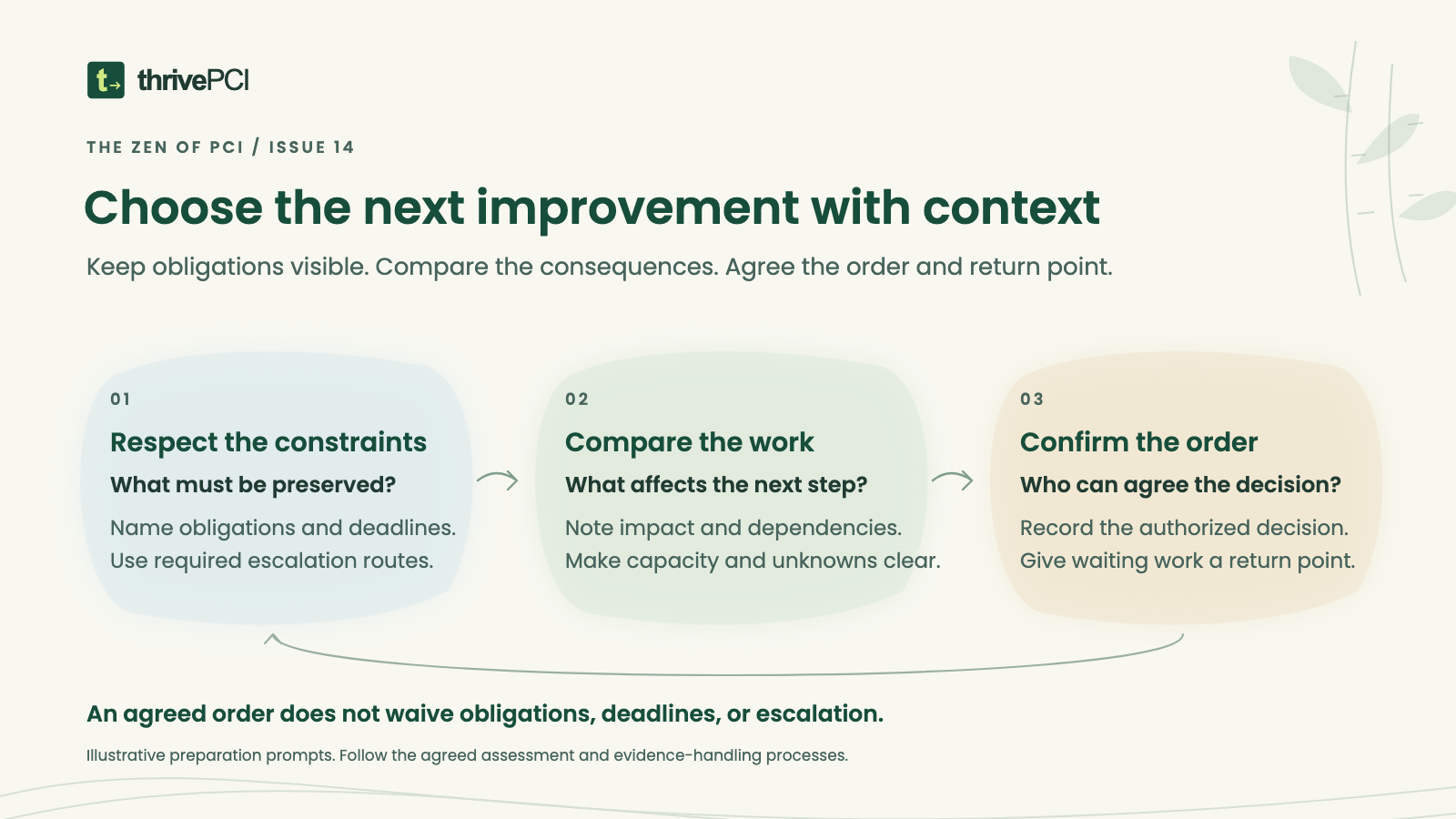
Start with what the work requires
Before ranking optional improvements, identify applicable obligations, deadlines, known issues, and any need for prompt escalation. Use the relevant assessment, risk, incident, corrective-action, and change processes where they apply. A discussion about capacity does not change a requirement or authorize someone to postpone required work.
Then make each proposed improvement specific enough to compare. What problem does it address? What supported consequence would continuing that problem have? What needs to happen first? Which people and decisions does the work depend on? Keep unknown impact or effort visibly unknown rather than filling a comparison with invented certainty.
In the fictional example, making the existing authorized guidance easier to find may be useful before asking colleagues to trial revised wording. That dependency deserves a conversation. It does not establish the order by itself or turn the coordinator's suggestion into an approved plan.
Leave a priority note people can use
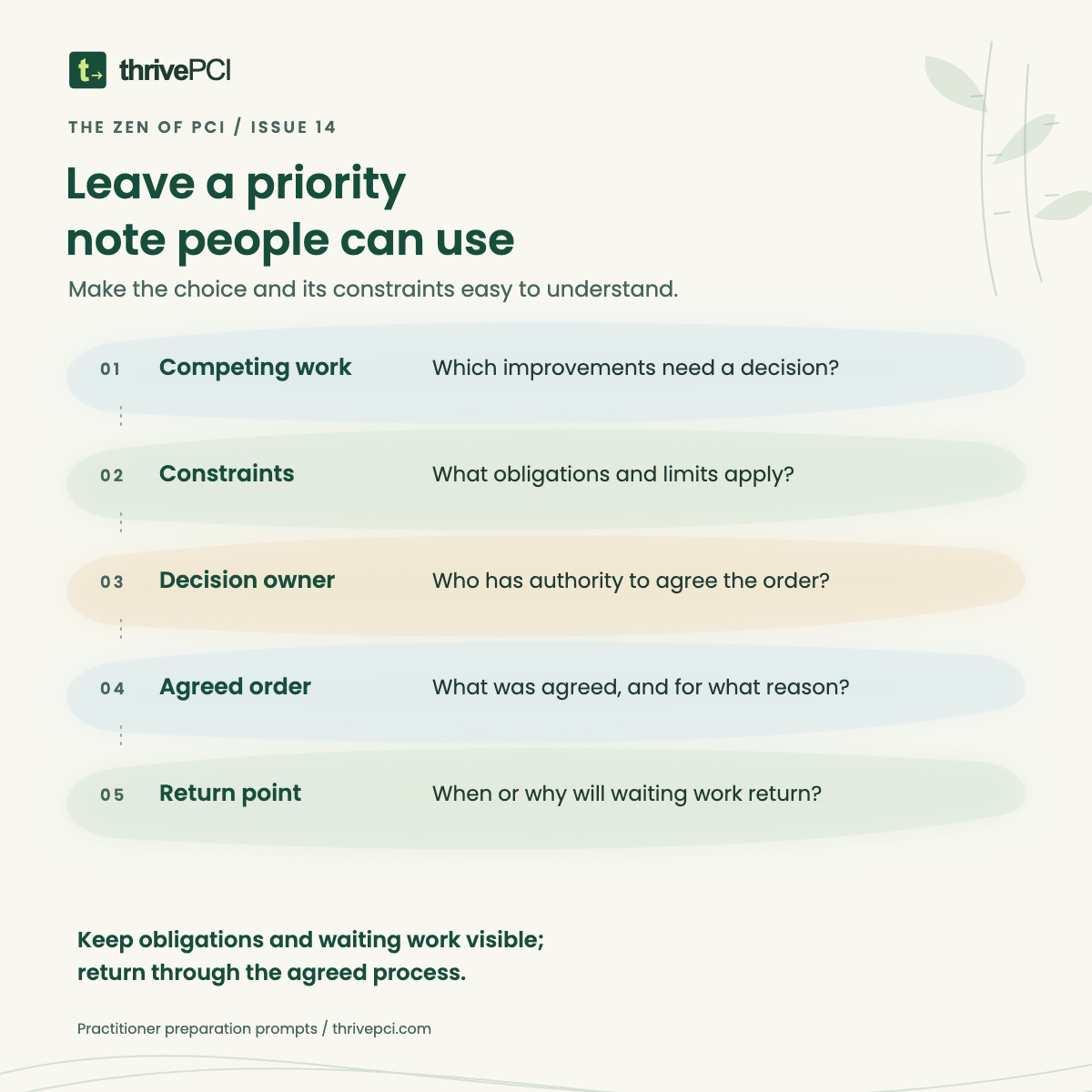
Use five prompts to preserve the decision and the work around it:
Competing work: Describe the improvements under consideration, their purpose, and the supported consequences of the current condition. Keep the scope and limits of each observation clear. Link authorized participants to the approved references instead of copying evidence into a general planning note.
Constraints: Identify applicable obligations and deadlines, dependencies, required approvals, capacity, and uncertainty. Capacity informs the plan; it does not waive obligations. Route a conflict that the group cannot resolve to the person with the appropriate authority.
Decision owner: Confirm who can agree the order and who has accepted the resulting actions. Preserve decisions assigned to other roles. A participant's helpful suggestion or a name in a note does not establish authority, acceptance, or permission to defer work.
Agreed order: Record the supported decision and its rationale, including dependencies and what remains unresolved. Distinguish a proposed sequence from an accepted one. Keep work awaiting attention visible, with its owner and appropriate handling through the normal process.
Return point: Record when or under what relevant condition the order should be reconsidered. A changed deadline, new information, or a failed dependency may need an earlier decision. Follow existing required intervals and escalation routes. This note creates no new PCI frequency.
Use the note to support the actual work record. It does not replace a formal risk decision, approval, corrective-action record, or required procedure. Where acceptance or information is missing, say so and agree how the question will return.
Explain why something comes next
A useful rationale might identify a necessary dependency, a supported consequence, or an authorized commitment. It should give the next participant enough context to understand the choice. A simple numerical score cannot resolve an obligation, confer authority, or establish that known issues may wait.
If the available capacity cannot meet an applicable commitment, make that conflict visible promptly through the established route. Preserve any decision that remains pending. An agreed order is useful only when the people carrying it out understand both the next action and the limits of the agreement.
Try a small priority conversation
Use three fictional improvements and role placeholders. Write one priority note with the five prompts. Add an invented dependency and an unresolved approval. Ask a partner to explain the proposed order and identify who must decide before it becomes an accepted plan.
Revise any wording that implies unsupported authority, a waived obligation, or completed work. Keep the pending integration decision separate. This optional practice uses no real evidence, sets no PCI activity interval, and promises no assessment outcome.
Good prioritization leaves people with a reasoned next step, an accepted decision route, and a way to reconsider when the facts change.
Explore the free Program Maintenance guide (opens in a new tab)