
NEWSLETTER · ISSUE 13
Keep an improvement useful after the first check
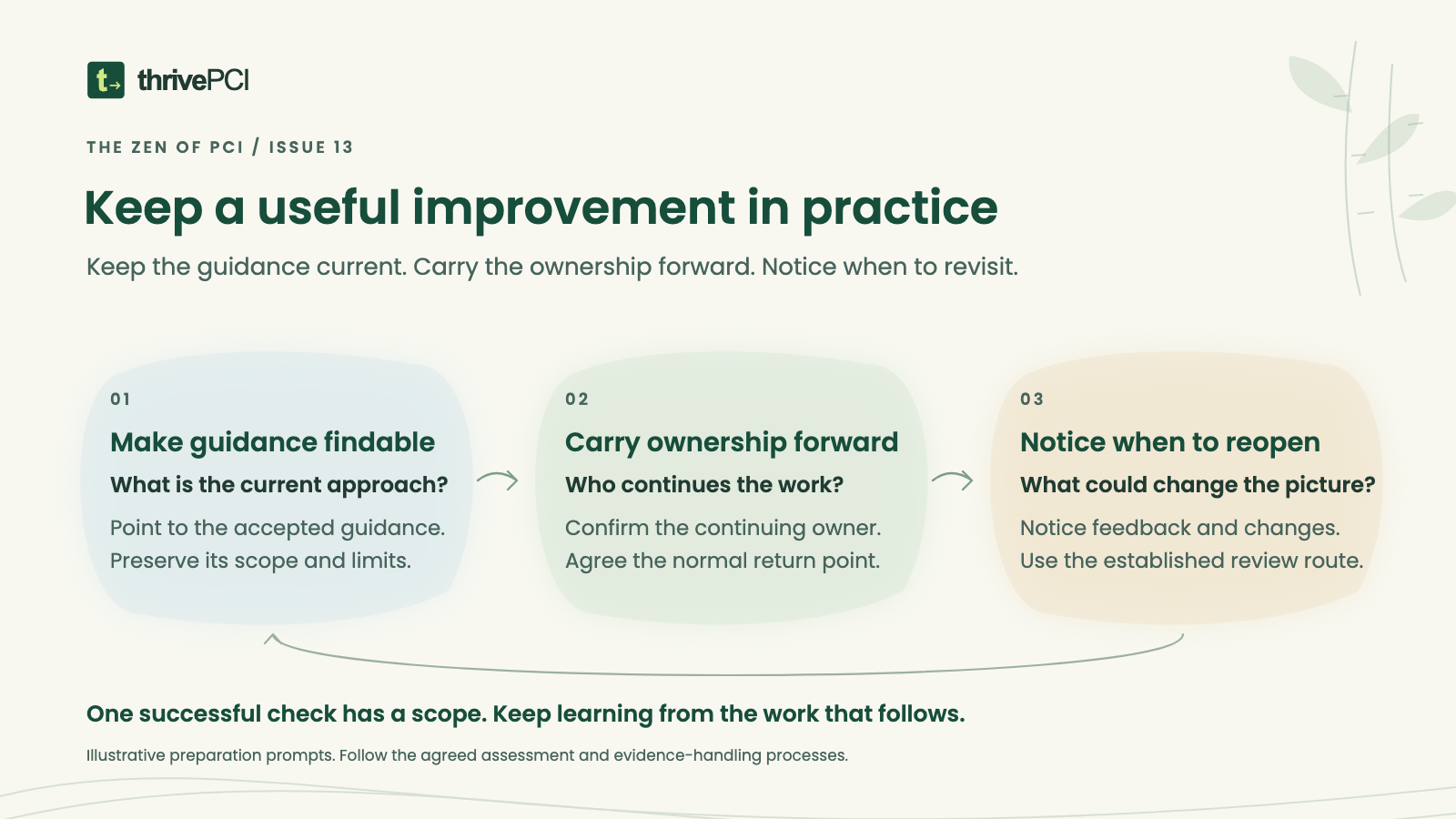
The first successful check gives an improvement a useful beginning. Someone tried the changed approach, compared the result with the intended purpose, and recorded what the example supported. The next question is how that improvement will remain useful when normal work resumes.
That question concerns continuity. People need to find the current guidance where they actually work. Someone needs to accept responsibility for keeping it useful. Feedback needs an agreed route. Changes in the work need a way to reopen an assumption that once made sense.
In our fictional supplier-integration example, clearer status vocabulary helped a colleague distinguish a prepared handoff from a pending integration decision. The check used a placeholder handoff and covered that particular example. It did not authorize the live integration, approve a wider rollout, or demonstrate effectiveness across every situation.
The integration decision remains pending. Keeping that position visible is part of carrying the improvement forward accurately. A useful preparation change should help people understand the work without changing a decision that belongs to an authorized owner.
Put the improvement where the work happens
A helpful explanation can disappear into a meeting note while an older template remains in use. Before describing the change as established practice, confirm the applicable review and change steps. Then make the current, authorized guidance available through the normal working location.
Keep its purpose and limits understandable. A reader should be able to tell which activity the guidance concerns, which version applies, and where to raise a question. Handle superseded material through the established document-control process. Avoid creating another unofficial copy that competes with the source people are expected to use.
This is the difference between checking an initial result and supporting continued use. An improvement can work in a trial and still be difficult to find, maintain, or question later. Continuing responsibility needs the same explicit acceptance as the original action.
Leave a continuity note people can use
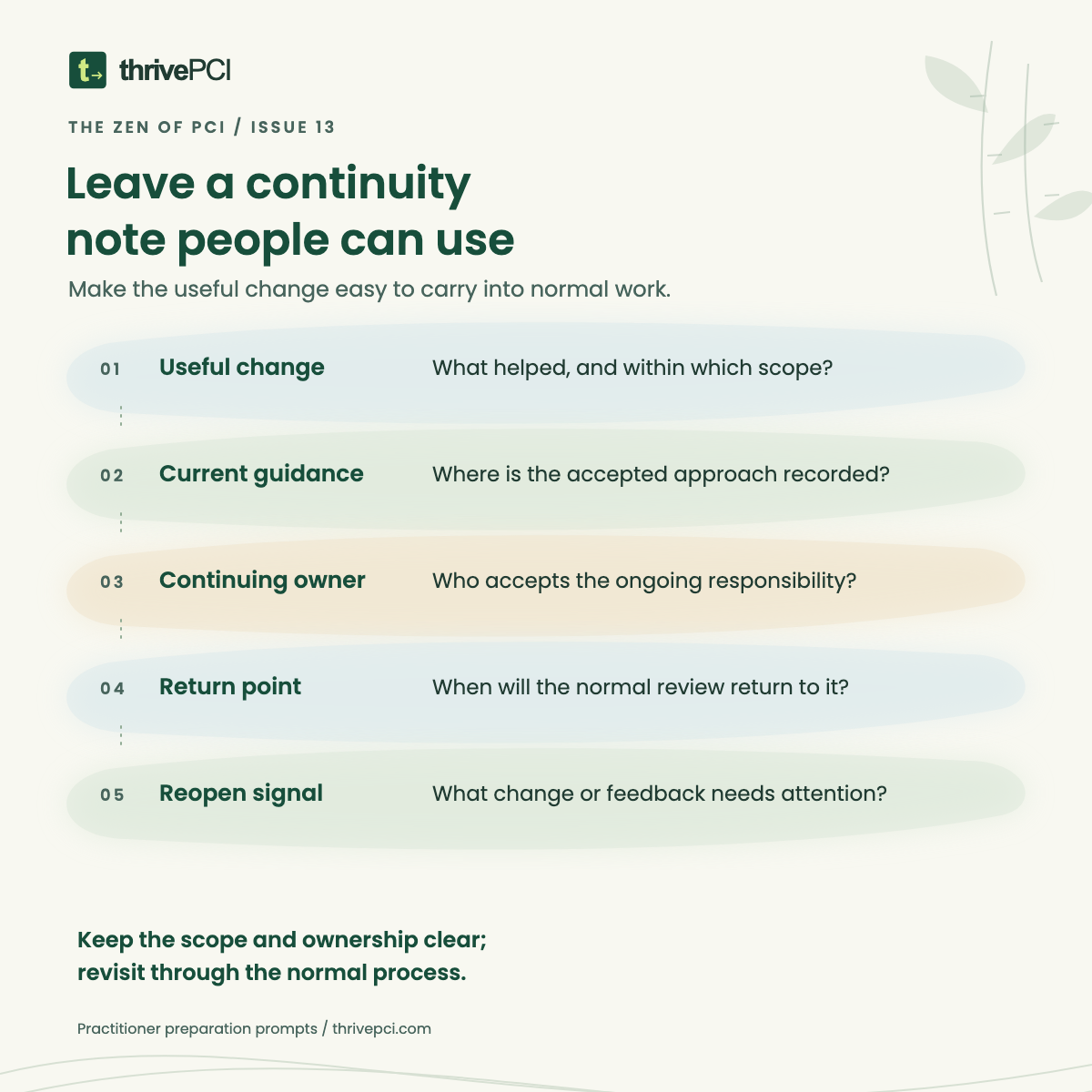
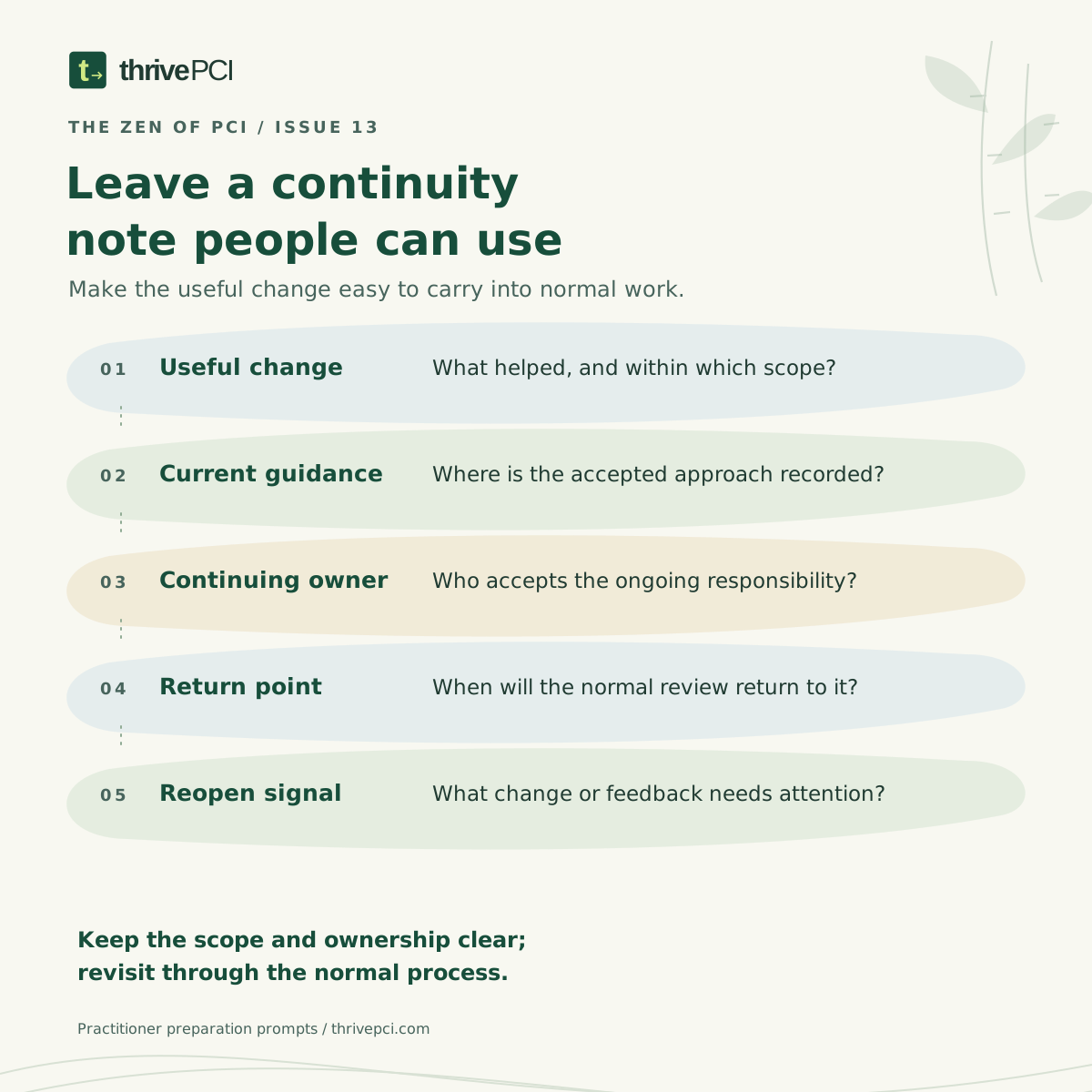
Use five prompts to connect the improvement with its ordinary working life:
Useful change: Describe the improvement and the supported benefit. Preserve the scope and limitations of the first check. In the fictional example, the vocabulary clarified one placeholder handoff; it did not settle the integration decision.
Current guidance: Identify the approved working reference, its relevant version, and where authorized people can find it. Keep supporting evidence in its proper location and share only the context the recipient is permitted to receive.
Continuing owner: Confirm who has accepted responsibility for maintaining the guidance and responding to questions. Identify any contributions or decisions that remain with other roles. A name on the note is not evidence of acceptance or authority.
Return point: Identify the normal, agreed opportunity or event for considering feedback and checking whether the guidance still serves its purpose. Use applicable processes and required intervals. This note does not invent a new PCI frequency or replace an existing review.
Reopen signal: Describe a change or observation that should prompt reconsideration. A new workflow, a changed responsibility, conflicting instructions, or repeated misunderstanding may need attention through the established route. Describe what actually applies to this improvement.
The note supports coordination. It does not replace required approvals, formal records, operating procedures, or assessment decisions. Where an owner, reference, or return point is still unconfirmed, leave that position visible and agree the next step.
Let ordinary use teach you something
Suppose a fictional colleague later asks whether the new wording applies to a different supplier workflow. The original example does not answer that question. Capture the context and route it to the appropriate owner. Do not silently extend the guidance because the earlier check went well.
The owner may confirm the existing scope, propose an authorized change, or ask for more information. Record the supported position and preserve any unresolved question. A request for clarification can be useful feedback without automatically proving a control failure or invalidating earlier work.
Try a small continuity exercise
Use the placeholder status-vocabulary improvement. Write a continuity note with the five prompts and invented role names. Ask a partner to find the current guidance and explain who would receive a new question. Give them a fictional change in workflow and ask what they would reopen.
Revise anything that depends on a person remembering an undocumented conversation. Keep unknown acceptance or approval explicit. This optional practice uses no real evidence, sets no PCI activity interval, and promises no assessment outcome.
A useful improvement has a place in the work, a person who has accepted its care, and a route for learning when circumstances change. That makes the first successful check something people can continue.
Explore the free Program Maintenance guide (opens in a new tab)