
NEWSLETTER · ISSUE 33
Turning first-days observations into a stable operating handoff
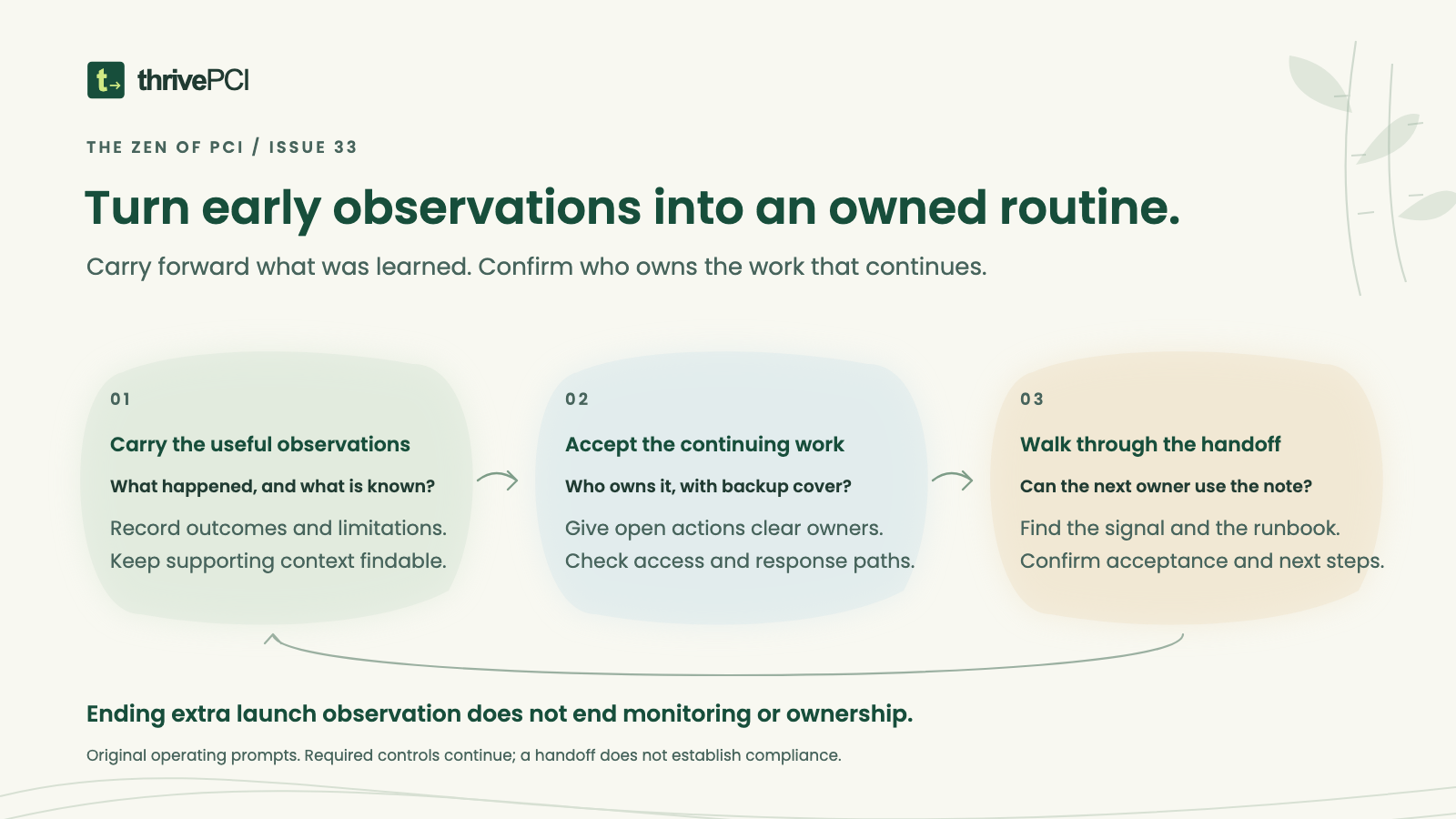
The first days after launch have produced something useful: observations from the actual service. Now the people who supported the launch need to pass that understanding to the people who will keep the service running.
A stable handoff makes the next working day easier to understand. The receiving owner can find the relevant signals, explain what remains uncertain, and use an agreed response route. The launch team can step back from its extra observation without leaving an unattended responsibility behind.
Start with the operating reality
Return to the fictional subscription startup from issue thirty-one. Its team investigated a payment notification that arrived later than the order view expected. The authorized records now explain that particular outcome. The operating owner needs that explanation, the relevant provider behavior, and the process for recognizing a similar disagreement.
One question remains open: the team has not yet confirmed how another notification condition will appear in the monitoring view. That uncertainty belongs in the handoff with an accepted owner and next action. Calling the service stable should never make an unresolved question disappear.
Leave an operating handoff people can use
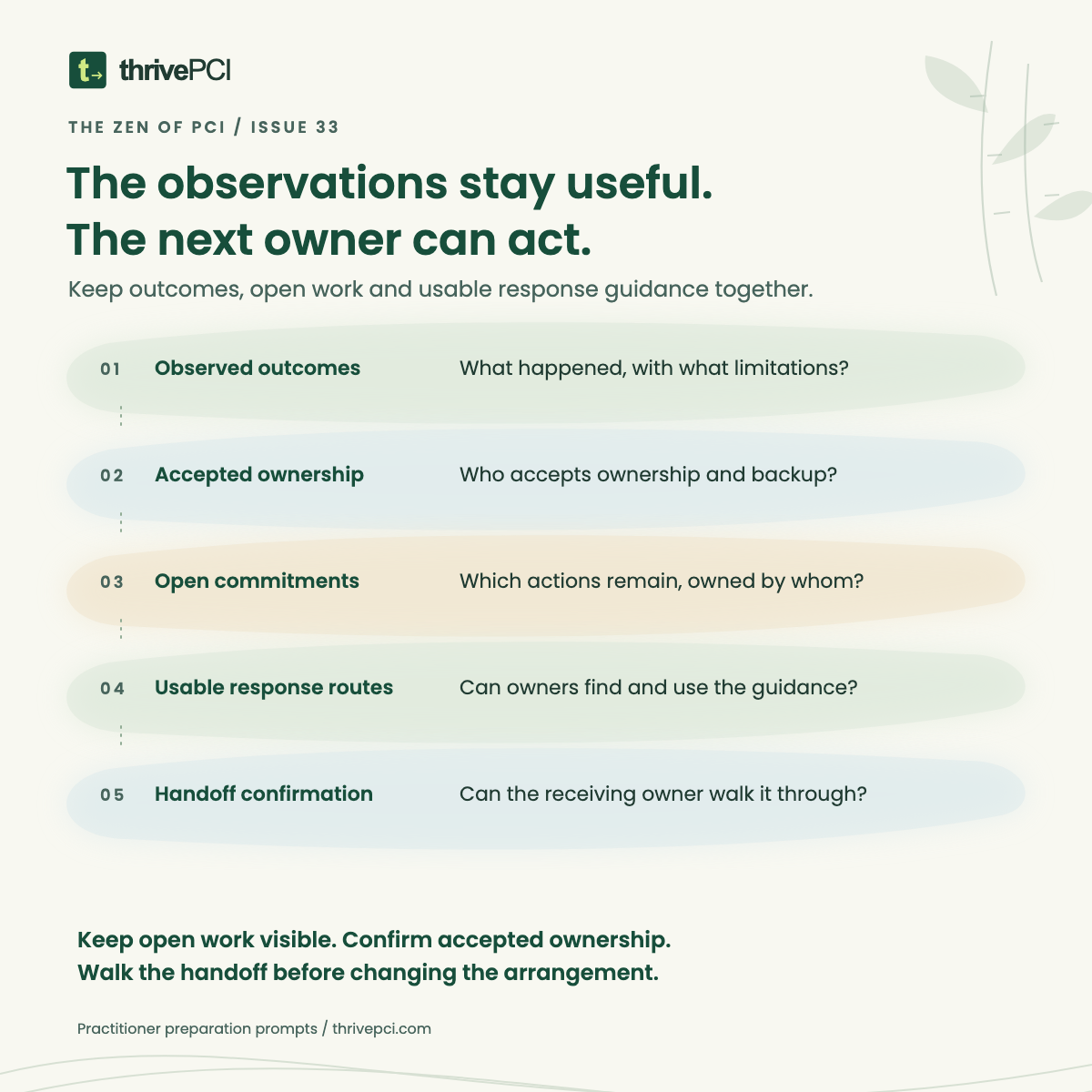
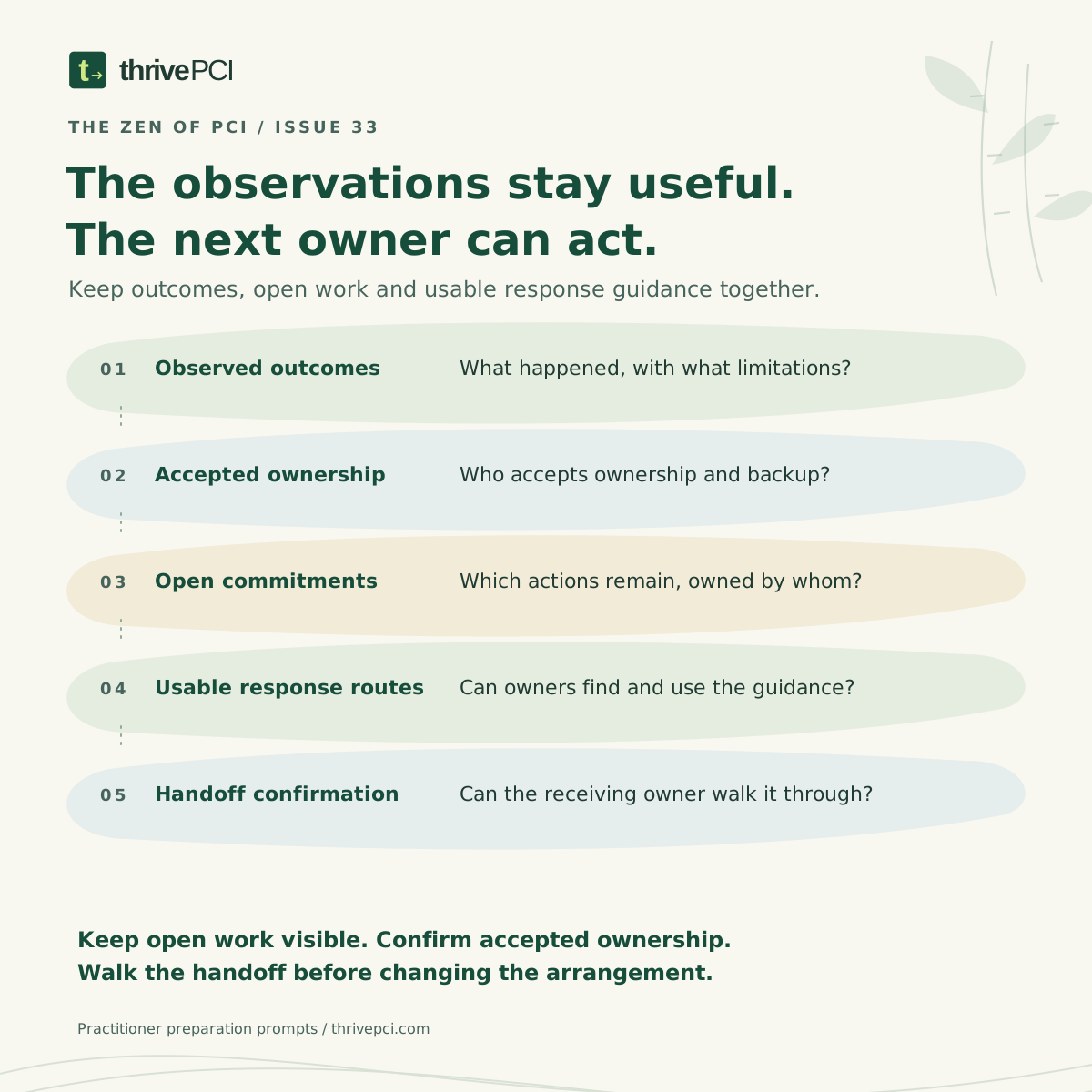
Use five prompts to connect the early observations with continuing work:
Observed outcomes: Describe the current service version and operating arrangement, what was actually observed, and the records supporting the explanation. Separate a confirmed outcome from an assumption or an untested condition. Include known limits in visibility. Preserve useful context about payment and order behavior without copying sensitive records into a general handoff document.
Accepted ownership: Confirm who accepts the continuing work and who provides cover. Explain the responsibilities being transferred, including coordination with relevant providers. Verify that the receiving people can obtain the approved access and guidance needed for their roles. A name in a document becomes useful when that person understands the work and has accepted it.
Open commitments: Carry forward unresolved questions, limitations, and improvement actions with their present status, accepted owner, next step, and agreed review point. Explain which conditions would require reconsidering the operating arrangement. An open item does not automatically prevent every transition; the appropriate decision-makers need to understand the uncertainty, authorize the arrangement, and preserve any required controls.
Usable response routes: Link to the current operating guidance, provider contacts, escalation process, and authorized recovery instructions. Confirm which decisions the operating owner may make and which require another authority. Keep suspected security incidents connected to the incident-response process. A familiar launch contact is helpful, but the continuing service needs a route that still works when that person is unavailable.
Handoff confirmation: Walk the receiving owner through a realistic observation and ask them to explain their next step. Confirm the responsibilities they accept, any conditions attached to the transition, and the questions that remain. Record who agreed to end the extra launch observation and why. The handoff should leave an understandable operating arrangement that the receiving owner can use without its author present.
Follow the remaining question
At the startup, the receiving owner opens the approved monitoring view and finds the payment and order references used in the earlier investigation. They explain how to raise a disagreement without treating an incomplete display as permission to charge again or change a financial record.
They then find the outstanding notification question. Its technical owner has accepted the next investigation, and the operating owner can explain what to do if the uncertain condition appears before that work is finished. The team records the agreed review point and the route for an earlier concern. The outstanding item stays visible after the launch conversation ends.
For a rehearsal, use a fictional service, invented records, and approved test access. Ask a colleague to locate a signal, identify who can authorize a response, and record a new question. Make the original launch lead unavailable in the scenario. Notice which instructions remain usable and which depend on knowledge that has not been shared.
Keep the program running
Ending extra launch observation does not end required security monitoring, payment reconciliation, provider oversight, or incident response. PCI DSS includes audit-log review obligations and an incident-response plan ready for suspected or confirmed security incidents. This handoff practice helps people continue the work; it does not change required frequencies or establish compliance.
Provider involvement also leaves customer oversight in place. Validation and reporting decisions remain with the relevant compliance-accepting entity. Keep those formal responsibilities separate from the practical decision to move from launch support into ongoing operations.
A useful closing question is simple: can the receiving owner explain what they now own, what they still need, and where the next concern goes? Their answer gives the team a concrete basis for confirming the handoff and continuing to improve it.
Explore the free Program Maintenance guide (opens in a new tab)