
NEWSLETTER · ISSUE 22
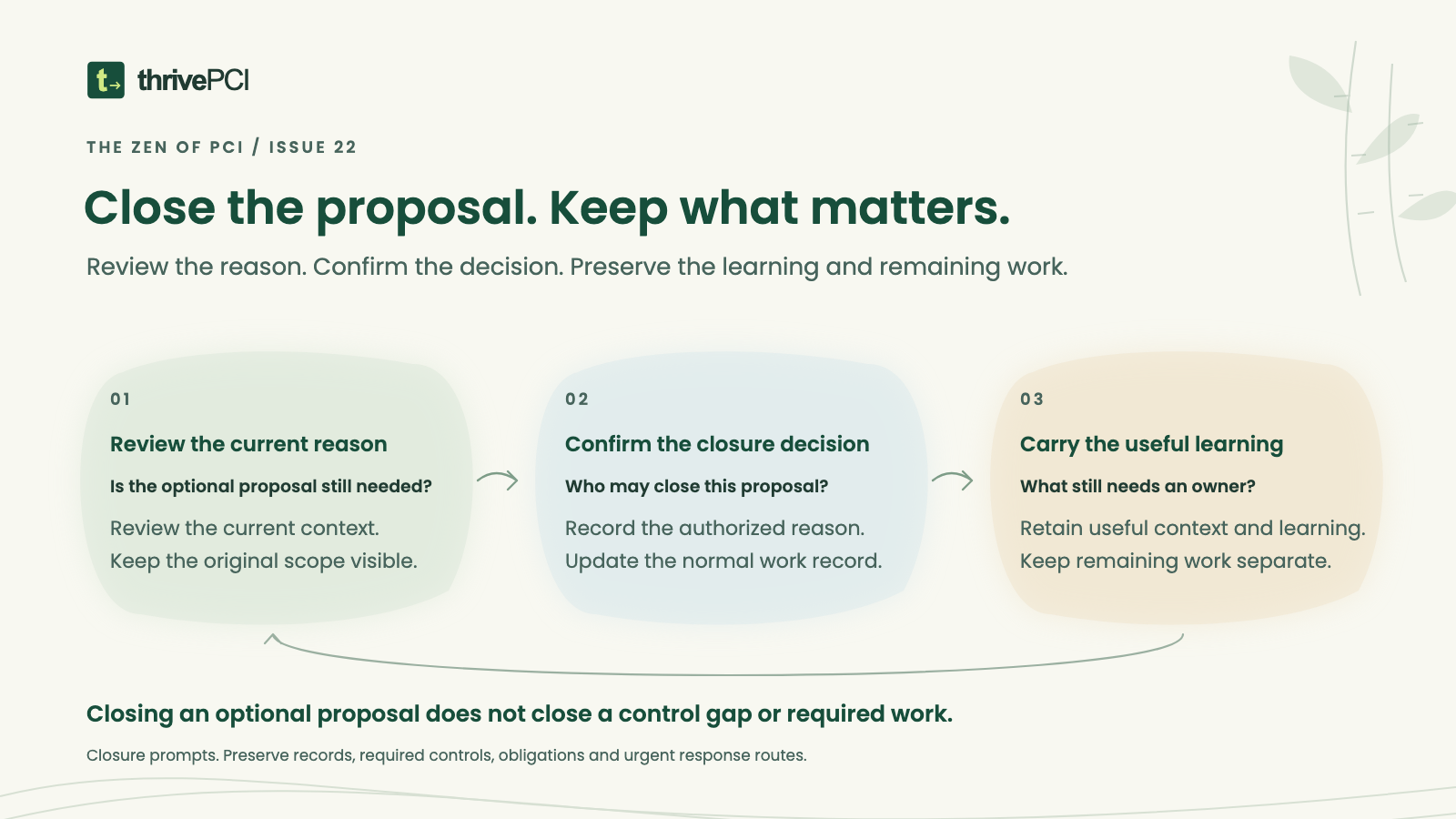
Close the proposal. Keep what matters.
Paused work does not always need a restart. Sometimes the original need has changed, an existing approach already addresses it, or the proposed activity no longer offers a useful next step. A deliberate closure can leave the team with less ambiguity and a clearer account of what remains important.
The useful question is specific: does this optional proposal still need to proceed? Answering it requires current context and the appropriate decision owner. An old task becoming quiet does not establish closure. A decision to close one proposal also needs a scope another person can understand.
In our fictional supplier-integration exercise, the optional placeholder wording trial was paused while a responsibility boundary was clarified. Its earlier mixed result remains useful: the participant found the next question but could not identify the responsible role. The proposed wording trial and the underlying responsibility question are separate matters.
For illustration, suppose the return review finds that current authorized guidance already provides a route for addressing that responsibility question. The appropriate role may decide that this particular optional wording trial no longer needs to proceed. That invented decision concerns the proposal, not proof that the underlying gap is resolved.
Review the current reason
Begin with why the proposal existed and what has changed. Compare the original question with the current setting, participants, guidance, and dependencies. Identify the references that support the comparison through their authorized routes. Keep a proposed explanation distinct from an established observation.
Existing guidance may make an extra trial unnecessary while still leaving work to apply that guidance or confirm its result. Preserve that distinction. A sensible reason to stop an optional activity should make the remaining question easier to see, rather than quietly making it disappear.
The contributor-capacity question and pending live integration decision remain separate, with their appropriate owners. Neither the old pause nor closure of the wording proposal answers those decisions.
Leave a closure note for paused work
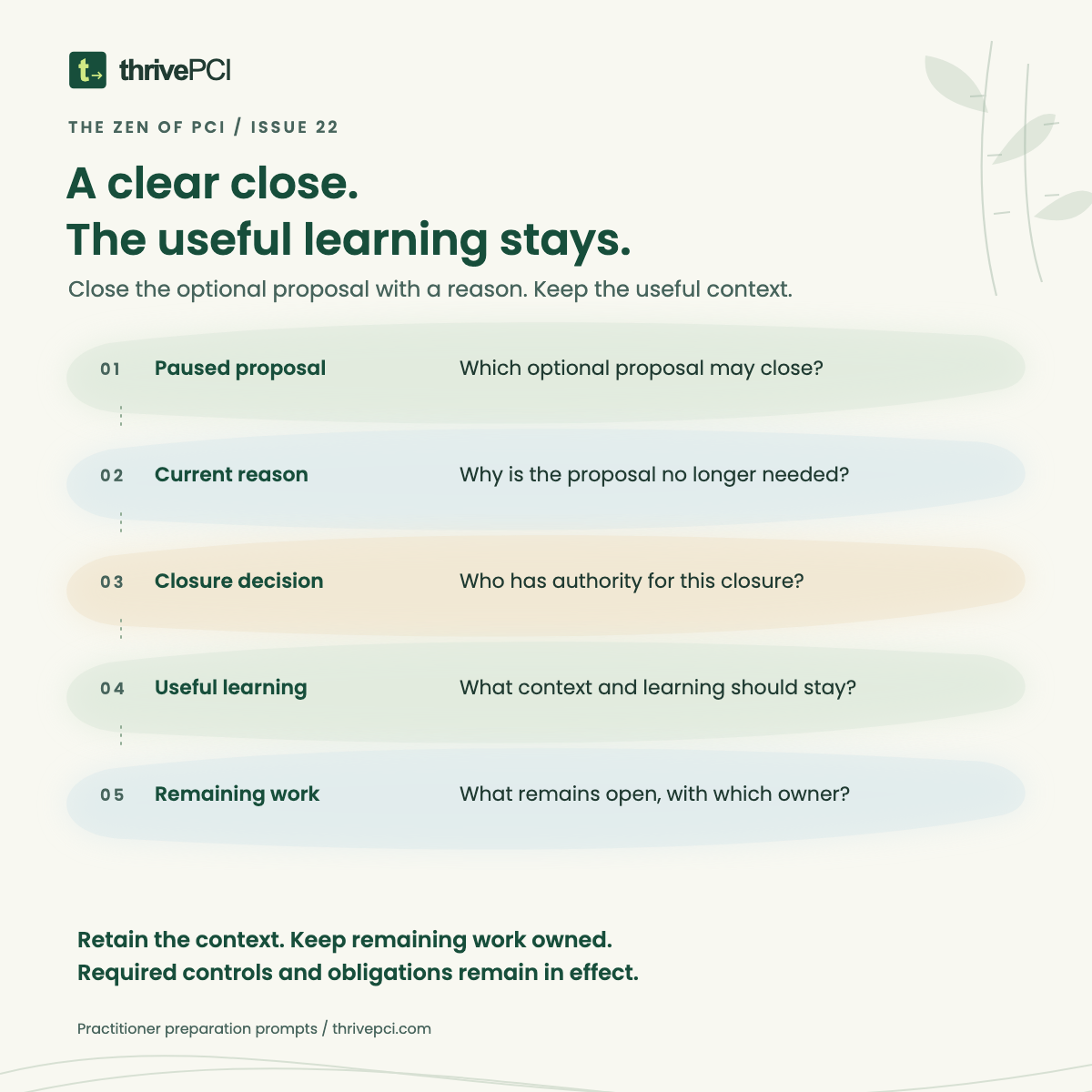
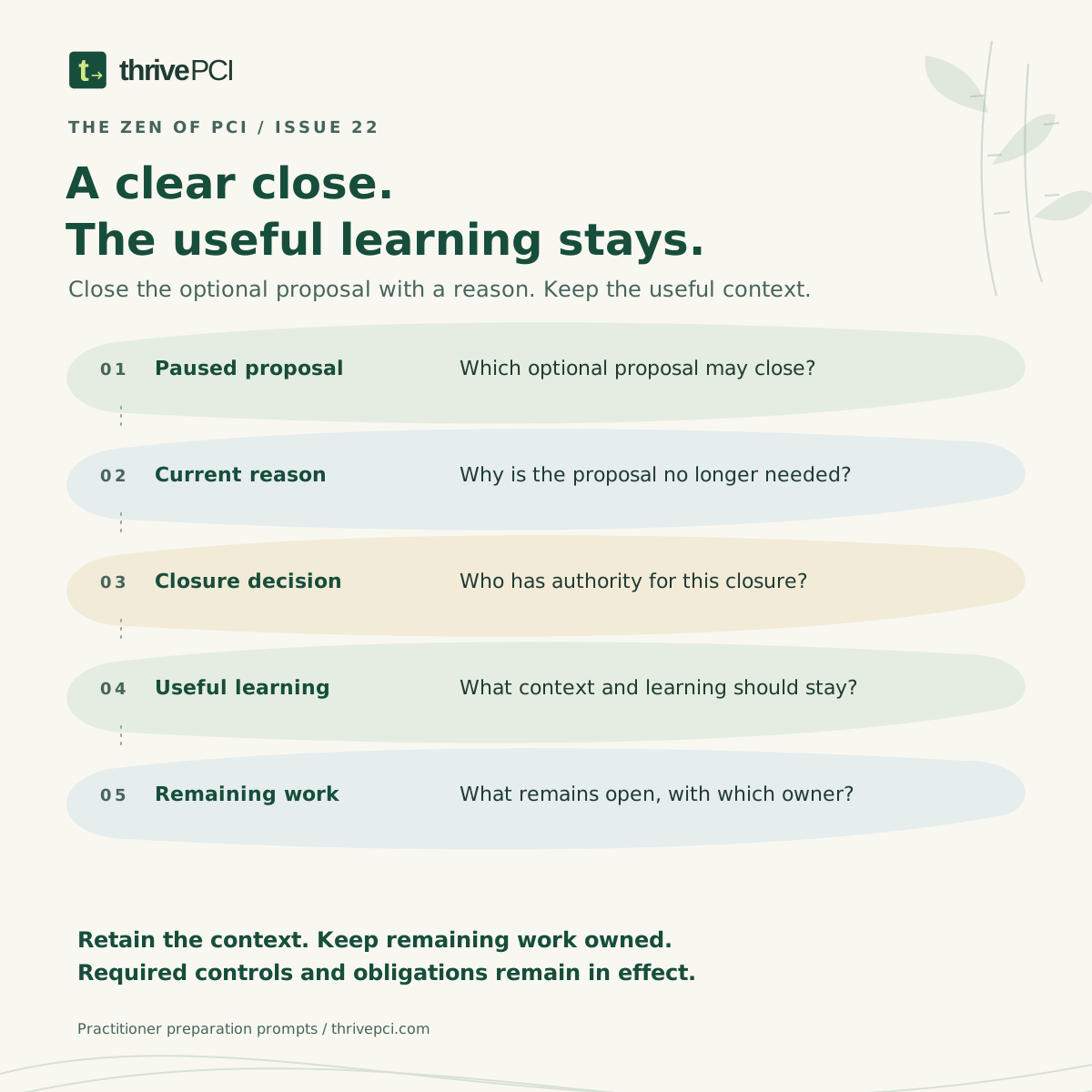
Use five prompts to make a deliberate closure understandable:
Paused proposal: Identify the optional activity, relevant version, and current work reference. State the scope of the proposal being considered for closure. Keep other activities and decisions distinct so the reader can see precisely what will no longer be taken forward.
Current reason: Describe why the proposal no longer needs to resume, using current authorized context. Preserve the original purpose and the change that matters. Explain uncertainty honestly; a proposal being unnecessary is different from its intended outcome having been demonstrated.
Closure decision: Identify the authorized decision, its owner, scope, and relevant conditions. Update the normal work record and communicate the supported position to affected participants through the proper route. A recommendation, an acknowledgement, and an authorized closure are different positions. Retain the context according to applicable record-handling processes.
Useful learning: Keep the observation that could help later work, with its supporting example and limits. In the fictional exercise, finding the next question was useful while the responsible role remained unclear. Closing the trial does not turn that mixed result into broader evidence of effectiveness or a compliance conclusion.
Remaining work: Identify questions, actions, or decisions that continue elsewhere and confirm accepted ownership through the normal process. Preserve any required remediation, control activity, obligation, deadline, or urgent response. Closing the optional proposal does not close the responsibility gap or authorize live integration.
These prompts support the existing approval, change, evidence-handling, assessment, and operating processes. They introduce no PCI activity interval and do not replace required records. The closure record helps people coordinate around the actual decision while required work continues.
Carry the useful learning
After an appropriate closure decision, check that the work record reflects it and the relevant people understand its boundaries. Retain authorized references and the reason for the decision. A clear record should let someone distinguish an intentionally closed proposal from an overlooked task or an unresolved issue.
If the setting changes later, return through the proper route for a new decision. The retained learning can inform that conversation without automatically reopening the old trial or extending its earlier permission. Current circumstances still need consideration.
Try closing one optional proposal
Use invented roles and the fictional paused wording trial. Write the five prompts. Ask a partner to identify the proposal that closes, the reason, the authorized decision, and the remaining question with its accepted owner.
Use no real evidence or sensitive details. Revise any sentence that makes closure imply successful remediation, deleted context, or wider approval. A useful ending keeps the decision clear, the learning available, and the work that still matters visible.
Explore the free Program Maintenance guide (opens in a new tab)